MY ACCOUNT
DONATE
SEARCH
LA County Library Logo
MY ACCOUNT
DONATE
SEARCH
  • GET A LIBRARY CARD
  • LOCATIONS
  • BOOKS & MATERIALS

    • Search Catalog
    • Booklists
    • Special Collections
    • Recommend A Title
    • Customized Recommendations
    • Books by Mail

    DIGITAL LIBRARY

    • eBooks & Audiobooks
    • Movies & TV
    • Music
    • Newspapers & Magazines

    MORE TO BORROW

    • CA State Parks Passes
    • Hotspot Loans
    • Tools & Musical Instruments
    • Museum Passes
    • Board Games
    • Seeds

    HELP

    • Getting Started Using the Online Catalog
    • Borrowing Materials
    • Download the Library Mobile App
    • Frequently Asked Questions
    • Events Calendar
    • Virtual Programs
    • Virtual Author Talks
    • YouTube Channel
  • RESEARCH

    • Databases
    • Special Collections
    • Digital Collections
    • Biblioboard Community Collections
    • Local History
    • Transcribe Letters
    • Federal Government Documents

    LEARN

    • Online Learning
    • Earn Your High School Diploma
    • Reading & Writing for Spanish Speakers
    • Learn Basic Tech
  • EXPLORE BY INTEREST

    • Cultural Resource Centers
    • Business & Career
    • Citizenship & Immigration
    • Faith, Culture, and Community
    • LBGTQ+ Pride
    • Parenting
    • Tax Informatiom
    • Veterans
    • Writers

    EXPLORE BY AGE

    • Early Learners
    • Kids
    • Teens
    • Students
    • Emerging Adults
    • Adults
    • Older Adults
  • CONNECT TO TECH

    • Wi-Fi
    • Hotspot Loans
    • Public Computers
    • Wireless Printing & Copies

    MOBILE FLEET

    • Bookmobiles
    • MākMō

    COMMUNITY

    • Reserve Meeting & Study Rooms
    • Emergency & Disaster Preparedness
    • Health & Wellness
    • Legal Resources
    • Books for Jails
    • Little Libraries
    • Metro Tap Cards
    • My Brother's Keeper Peer Advocates
    • EV Charging Locations
    • LA County Departments

Willowbrook

Community History

Willows and a slow, shallow brook distinguished this portion of the Los Angeles plain long before it was given the name “Willowbrook.” A lone-standing streamside willow tree near the present intersection of 125th Street and Mona Boulevard was an original rancho boundary marker in the 1840s. Willowbrook was probably named after the willows that grew around the many springs that watered the area prior to extensive agricultural and suburban development, beginning in the late 1800s. In earlier years, the land that is now Willowbrook was part of the 4,500 acre Rancho Tajauta, granted to Anastacio Abila in 1843.

The first subdivisions in the Willowbrook area were filed in 1894 and 1895 and the first official use of the name Willowbrook came in 1903, when the Willowbrook Tract was recorded with the County Recorder. The deep lots in the Willowbrook subdivision enabled residents to grow fruits and vegetables, run hogs, and raise chickens behind their homes. This mixture of suburban and rural land uses continued in Willowbrook into the early 1980s. At that point, Willowbrook began to lose its rural character due to redevelopment that introduced an increasing number of new commercial and residential facilities into the area. As a result, present-day Willowbrook appears similar to other communities in the South Central section of Los Angeles.

Image Gallery
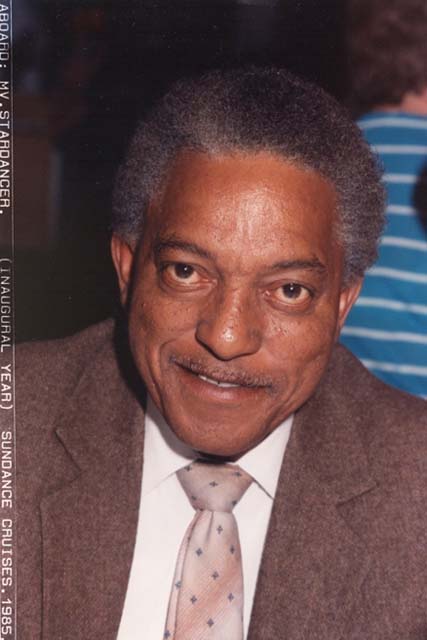
Vincent J. Proby, the architect who designed the A C Bilbrew Library
Vincent J. Proby, the architect who designed the A C Bilbrew Library [County of Los Angeles Public Library]
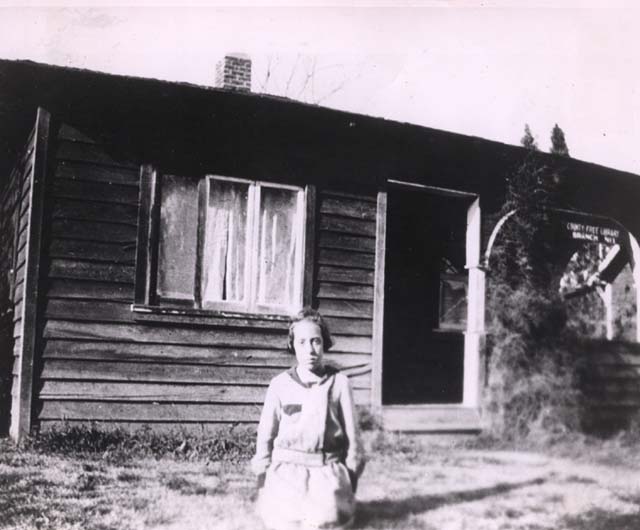
First county library in Willowbrook with the first librarian (Mrs. Jenks) kneeling in front,
First county library in Willowbrook with the first librarian (Mrs. Jenks) kneeling in front, c. 1913 [County of Los Angeles Public Library]
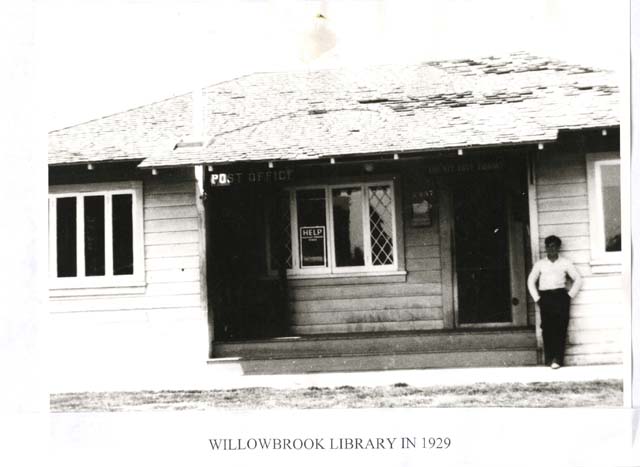
Exterior of the first county library in Willowbrook
Exterior of the first county library in Willowbrook, 1929[County of Los Angeles Public Library]
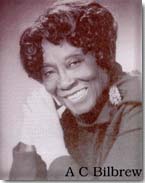
Madame A C Bilbrew, after whom the A C Bilbrew Library is named
Madame A C Bilbrew, after whom the A C Bilbrew Library is named [County of Los Angeles Public Library]
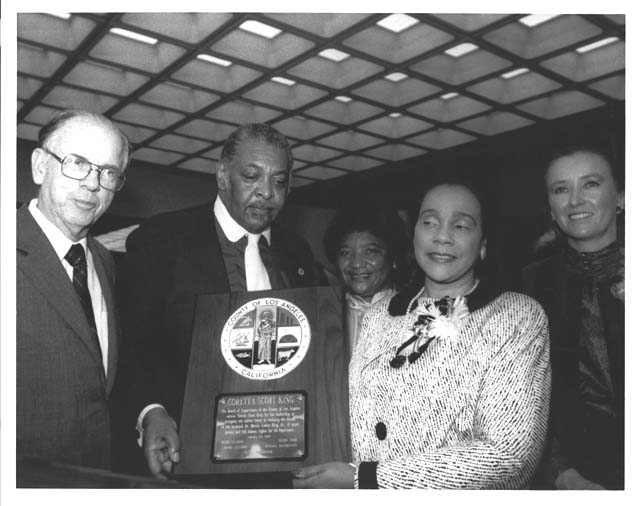
Coretta Scott King at A C Bilbrew Library Black History Month Celebration
Coretta Scott King at A C Bilbrew Library Black History Month Celebration, c. 1980s [County of Los Angeles Public Library]
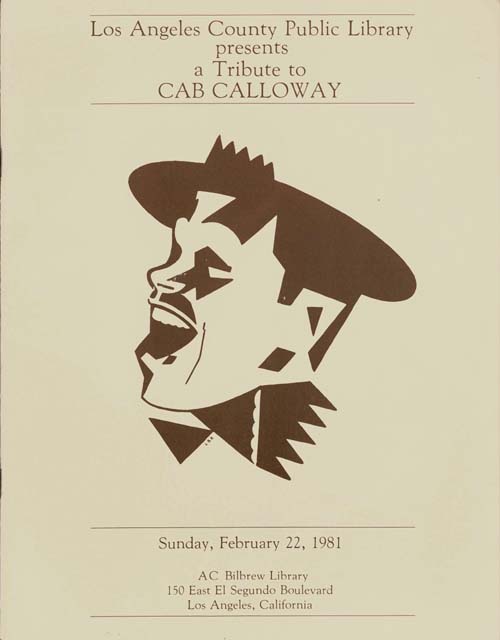
Library program for Black History Month celebration with Cab Calloway
Library program for Black History Month celebration with Cab Calloway, 1981 [County of Los Angeles Public Library]
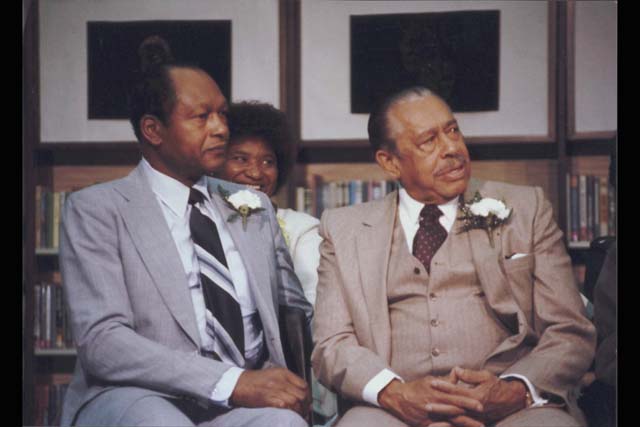
Cab Calloway at A C Bilbrew Library Black History Month Celebration
Cab Calloway at A C Bilbrew Library Black History Month Celebration, c. 1980s [County of Los Angeles Public Library]
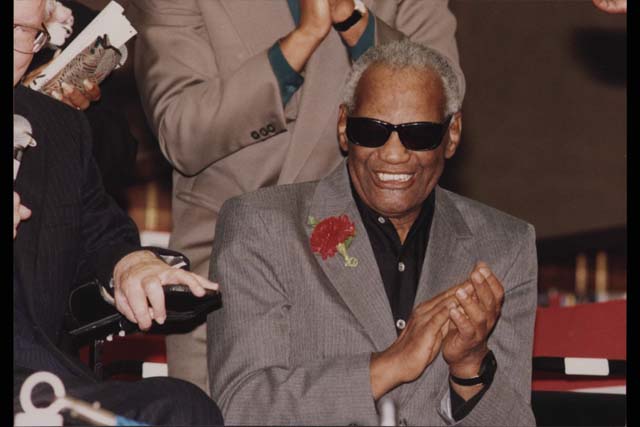
Ray Charles at A C Bilbrew Library Black History Month Celebration
Ray Charles at A C Bilbrew Library Black History Month Celebration, c. 1990s [County of Los Angeles Public Library]

Frequently Asked Questions

1. Do you have information about A. C. Bilbrew, after whom the Library is named?

Madame A C Bilbrew (1888-1992) was a community leader and a former deputy to Los Angeles County Supervisor, Kenneth Hahn. She was also known world-wide for her versatility as a musician and poet. She was a producer of pageants and dramas, an outstanding dramatic reader, and a choral director. She received national and international recognition for her performances on the stage and in film. Despite her busy schedule, Madame Bilbrew gave freely of her time and talents to the Willowbrook community, particularly in efforts directed toward better understanding among youth.

Madame Bilbrew was born in Washington, Arkansas in 1888, as the seventh of ten children of the Reverend S. L. and Rebecca Harris. She attended Texas College in Tyler, Texas and studied piano at the University of Southern California School of Music. She later married A. C. Bilbrew and became the mother of three daughters.

In 1923, Madame Bilbrew was the first Black soloist to appear on radio. In 1940 to 1942, she directed and announced the “Gold Hour” which aired over Radio Station KGFJ. In 1960, she was a delegate to the Women’s Convention in Copenhagen, Denmark, and was chosen by the “Women of the Soviet Union” to visit Russia. In 1961, she was elected Chairman of the Fine Arts Department of the National Council of Negro Women and founded the “Opportunity Workshop” for cultural development of youths and adults for the Willowbrook community in 1963. Madame Bilbrew directed the Senior Choir of Phillips Temple C.M.E. Church for a number of years, became director of the Radio Choir of Peoples Independent Church of Christ, and directed the Radio Choir of Hamilton Methodist Church. When the present library building was opened in November of 1974, it was named in her honor.

2. Do you have information about Vincent Proby, the architect of the A C Bilbrew Library?

Vincent Proby, the architect of the A C Bilbrew Library and numerous other public and private buildings, was born in Wichita, Texas. He moved with his family to Los Angeles at a very early age and attended Los Angeles Public schools, Los Angeles Junior College, and the University of Southern California, where he majored in architecture.

In the first years of his architectural career, he served as project manager for many prominent buildings, among which were the Los Angeles Sports Arena and the Las Vegas Airport, eventually founding his own firm. He designed many projects in the state of California, including several buildings for the Los Angeles Unified School District, several on the UCLA campus, and Los Angeles City College, Pierce College, and Scripps Institute. His projects also included banks, libraries, museums, medical buildings, churches, mortuaries, private residences, children’s centers, shopping centers, and military buildings.

Proby was the first member of a minority group ever appointed to the State Board of Architectural Examiners, where he served for eight years. During that period, he was elected and served the organization as Secretary, Vice-President, and President. He also served on a number of different committees for the National Board of Architectural Examiners and assisted in writing the National and California architectural examinations. He served as an examination grader for ten years. In addition to his distinguished architectural career, he also held the California Teaching Credential and served for many years as a guest teacher for several state and private universities.

3. What Indians lived in this area?

Native Americans who lived in the Los Angeles area spoke a language distinct from their neighbors to the North and South of them. They have come to be known as Gabrielinos, because many of those who survived European diseases and the disruption of their normal trade patterns and culture went to the Mission San Gabriel, some voluntarily, others only when confronted by force. The Gabrielino lived in domed, circular structures with thatched exteriors. Both men and women wore their hair long and used a vegetable charcoal dye and thorns of flint slivers to tattoo their bodies. They required very few clothes, though women usually donned deerskin or bark aprons, and all might wear animal skin capes in cold or wet weather. Like most California Indians, the Gabrielino of the South Gate area ate roots and berries, rabbits, antelope, squirrels, crows, and other birds.

The first European to visit the future home of South Gate discovered many Indian villages between the Pacific Ocean and the San Gabriel mountains. Two villages, probably known as Tibahag-Na and Ahau, are thought to have been located within the boundaries of the present community. Passing through during the mid 1700s as part of Spaniard Gaspar de Portola’s famous expedition from San Diego to Monterey, Padre Juan Crespi observed that the Indians in the area were very friendly. Nevertheless, during the late 1700s and early 1800s, after dominating the Los Angeles basin area for hundreds of years, those Gabrielino who did not flee were gradually moved to Spanish missions. Many became laborers for local landowners. Most eventually adopted a new, more European lifestyle. By the twentieth century, few traces of Gabrielino culture remained.

Gabrielino Tongva Springs Foundation

Los Angeles Original Peoples

4. Do you have general information about the history of the Willowbrook area?

Willows and a slow, shallow brook distinguished this portion of the Los Angeles plain long before it was given the name “Willowbrook.” A lone-standing streamside willow tree near the present intersection of 125th Street and Mona Boulevard was an original rancho boundary marker in the 1840s.

Willowbrook was rich in springs in the early days and winter rains would bring up fine stands of rye grass between gravelly ridges left by long-ago floods of the Los Angeles River. As early as 1820, Don Anastacio Abila was grazing cattle on the land and by 1843, the Mexican governor had granted him 4,500 acres. This grant was named the Rancho Tajauta and it extended from the marshes along present Alameda Street westward to approximately the present line of the Harbor Freeway. All of present-day Willowbrook is within the area covered by Rancho Tajauta.

The first subdivisions in the Willowbrook area were filed in 1894 and 1895 on land along what is now Rosecrans Boulevard. The first official use of the name Willowbrook came in 1903, when the Willowbrook Tract was recorded with the County Recorder. The tract straddled the newly opened Pacific Electric railway line to Long Beach. There is no evidence that a townsite was envisioned and street patterns were not coordinated with adjacent tracts. The name Willowbrook came into use for the whole area, because the Big Red Cars of the Pacific Electric Railroad Company stopped at 126th Street in Willowbrook.

Lot buyers in Willowbrook expected to live a definitely suburban life. The deep lots (up to 300 feet deep in many cases) attracted working-class families, especially newcomers to Southern California. The Big Red Cars provided fast, reasonable transportation to department stores in downtown Los Angeles and to jobs in the Long Beach and San Pedro harbor areas. During the Depression years, residents used the land behind their homes to grow fruits and vegetables, run hogs, and raise chickens. These land uses, together with the vacant lots covered with mustard plants, intensified the area’s rural appearance. After the end of the Depression and World War II, increasing suburban development occurred in Willowbrook, but not to the extent that it substantially altered the area’s rural character. Even the 1965 Watts Riots did not change that, although Willowbrook suffered damage to a number of its buildings, including Willowbrook’s community library.

The mixture of suburban and rural land uses continued in Willowbrook into the early 1980s, when the area began to lose its rural character due to a redevelopment plan drafted by the Watts Labor Community Action Committee (WLCAC) under the leadership of Ted Watkins and supported by Los Angeles County. Under this plan, 365 acres of Willowbrook land was redeveloped to provide new commercial and residential facilities. As a result, present-day Willowbrook appears similar to other communities in the South Central section of Los Angeles.

Watts Labor Community Action Committee

5. What can you tell me about past Black History Month celebrations at the Library?

Since 1980, the A C Bilbrew library has hosted the County Library’s African American History Month Celebration. Eubie Blake was the first honoree of the “Living Black History Tribute” (later the “African-American Living Legend” series), a focus of the Library’s celebration. Other honorees have included Cab Calloway, Count Basie, Rosa Parks, James Baldwin, Coretta Scott King, and Ray Charles.

Los Angeles County – Black History Month

6. What can you tell me about the history of jazz on Central Avenue?

Prior to the 1950s, when deed restrictions and zoning codes limited where African-Americans could live or operate businesses, Central Avenue to the south of downtown Los Angeles served as the focus of the African-American community’s residential, economic, and cultural development. Jazz found a particular home here from the 1920s to the 1950s. The Hotel Dunbar was the area’s best known venue for Black jazz performers, including Count Basie, Ella Fitzgerald, Duke Ellington, and Louis Armstrong.


All About Jazz – Central Avenue Sounds

Los Angeles Public Library – Photo Collection

LA County seal

County of Los Angeles

Do You Need Help?
211 LA County
Public Alerts
Cooling Centers

SITE INFO

Accessibility
Language Access Support
Disclaimer
Privacy Policy
All Library Policies

ABOUT US

About the Library
Library Holidays
Strategic Plan
Career Opportunities
Public Records
Library Commission
Solicitations
Statistics
Land Acknowledgment
Civic Resources

CONTACT US

Email - Ask a Librarian
Text/Chat (M-F 12 pm - 6 pm)
Recommend a Title for Our Collection
Film at a Library
Performer and Presenter Application
Press Room
Support Us
Volunteer
Join a Friends Group
Donate
CONTACT US
LACOUNTY.GOV
  • My Account
  • GET A LIBRARY CARD
    • GET A NEW CARD
      • Digital Library Card
      • Library Cards & Your Account
      • Library Card Application (English / Spanish)
      • Library Card Application (English / Chinese)
      • Get a PIN
      • Get notices by email
      • Frequently Asked Questions
    • Library Policies
      • Library Cards & Your Account
      • Borrowing Materials
      • Computer & Wi-Fi Access
      • Collection Policy
      • Customer Expectations
      • Guidelines for Use of Meeting Rooms
      • Guidelines for Use of Study Rooms
      • Social Software Policy
      • Language Access Support
      • Privacy Policy
  • Digital Library
    • Explore
      • eBooks & Audiobooks
      • Movies & TV
      • Music
      • Newspapers & Magazines
      • Freegalmusic
      • Hoopladigital media
      • Kanopydigital media
      • Libby, by OverDriveebooks and magazines
      • PressReaderdigital magazines
    • Learn
      • Online Learning
      • Brainfuselive tutors
      • Earn your High School Diploma
      • Gale Coursesinstructor-led
      • Learn Basic Tech
      • Learning Expresstest prep
      • LinkedIn Learning (formerly Lynda.com)video classes
      • Mangolanguages
      • Leamosliteracy
      • Universal Classinstructor-led
    • Research
      • BiblioBoard Community Collections
      • Databases
      • Digital Collections
      • Magazines
  • LOCATIONS
  • BOOKS & WRITING
    • SEARCH THE CATALOG
    • Getting Started
    • Booklists
    • Recommend a Title for our Collections
    • More Books to Explore: Suggestions Just for You
    • Books by Mail
    • NoveList Plus
    • Writers’ Corner
    • Tell Your True Tale
  • Teens & Kids
    • Teens
      • Teens
      • Virtual Programming
      • Activity Ideas for Teens
      • Book Reviews by Teens
      • Students
      • Volunteer
    • Kids
      • Kids
      • Virtual Programming
      • Activity Ideas for Kids
      • Students
      • Online Resources
    • Parents & Families
      • Students
      • Early Learners
      • Healing Library Kits
      • Parent Support & Resources
      • Activity Ideas for Early Learners
      • Kids’ Fine Reduction: Great Read Away
      • Virtual Programming
  • Resources
    • Programs
      • Books for Jails
      • Business Resources
      • Citizenship
      • Earn Your High School Diploma
      • LGBTQ+ Pride
      • My Brother’s Keeper Peer Advocates
      • Tools for Job Seekers
      • Work Ready: Borrow a Laptop & Learn Job Skills
      • Older Adults
    • Services
      • Connect to Tech
      • COVID-19 Antigen Tests
      • Discover & Go
      • Federal Government Documents
      • Hotspot Loans
      • MākMō
      • Metro TAP Cards
      • Park & Connect
      • Printing
      • Request a Room
      • Special Collections
      • State Parks Passes
      • Tax Info
      • Tool Lending Library
      • Vaccine Clinics
      • Veterans Connect
      • Wi-Fi
    • Cultural
      • American Indian Resource Center
      • Asian Pacific Resource Center
      • Black Resource Center
      • Chicano Resource Center
      • Faith, Culture, & Community
    • Local History
      • Agoura Hills
      • Antelope Valley
      • Carson
      • Catalina Island
      • Claremont
      • East Los Angeles
      • Gardena
      • Lakewood
      • La Puente Valley
      • Malibu
      • Pico Rivera
      • San Dimas
      • San Fernando
      • San Gabriel
      • South Gate
      • Willowbrook
  • EVENTS
    • Virtual Programming
  • Donate
×
  • Search the Catalog
  • Search the Website
Advanced
Search
Search

Downloads and Streaming

Digital Media

With your LA County Library card, you can download or stream eBooks, eAudiobooks, magazines, music, and movies on your computer, tablet, or phone. It's free and you'll never have to worry about overdue fines!

You'll need a library card in good standing and a PIN to access most downloadable & streaming content.

  • ebooks
  • audiobook icon
  • music icon
  • magazine icon
  • movie icon

Kindle Paperwhite eReader

eReaderBanner

Welcome to a New Way to Read...

Have you walked into a library and wished you could check out more books than you could possibly carry? Check out a Kindle Paperwhite at participating libraries with a collection of titles that you are sure to enjoy. Each Kindle has been loaded with expert-selected books.

You don’t need internet access - all the books are pre-loaded onto the Kindle so you are ready to read.

  • Three week checkout
  • Renew up to 3 times, as long as no one else is waiting
  • Must be 18 or older (or under 18 with parent permission)
  • eBooks cannot be added to this device by user

How do I get one?

  • Visit a participating library to check out or place a hold on a Kindle Paperwhite. Kindles are not sent to other libraries for pick up.
  • Note: Selection of genres varies per library. Click on a library below to see the list of genres.

Library Locations with eReaders

Click on the library to view list of genres available.

Many of our libraries offer enhanced resources, computers, and online services to support your homework needs. Check with your local library!

Family Place

What is Family Place?

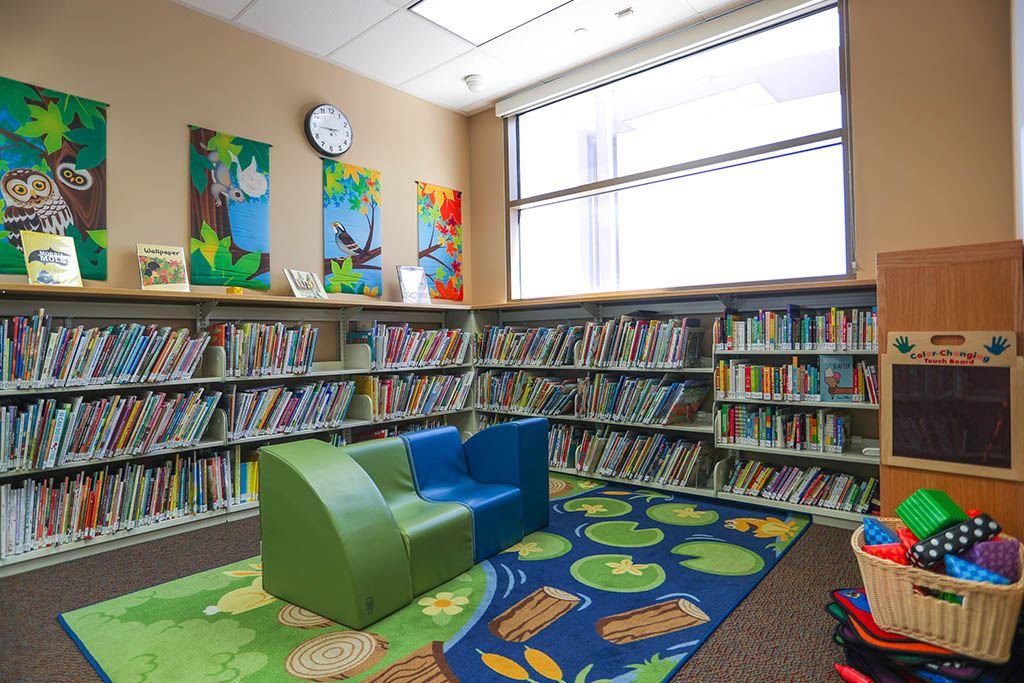
A Family Place Library is a center for early childhood information, parent education, emergent literacy, socialization, and family support. Family Place builds on the knowledge that good health, early learning, parent involvement, and supportive communities play a critical role in young children's growth and development. Each Family Place Library features the following core elements:

  • A bright, colorful, and welcoming space for young children and their parents.
  • A collection of books, toys, videos, music, and other materials for babies, toddlers, parents, and service providers
  • Access to resources that emphasize emergent literacy, reading readiness, and parent education.
  • Developmentally appropriate programming, such as baby and toddler storytimes for younger children and their parents.
  • Outreach to new and underserved populations.
  • The Parent-Child Workshop is a five-week workshop featuring local professionals, such as nutritionists, speech and language therapists, and child development experts, who serve as resources for parents.

The first three years of a child's life lay the foundation for learning. Get the tools and resources you need to give your child the best possible start.

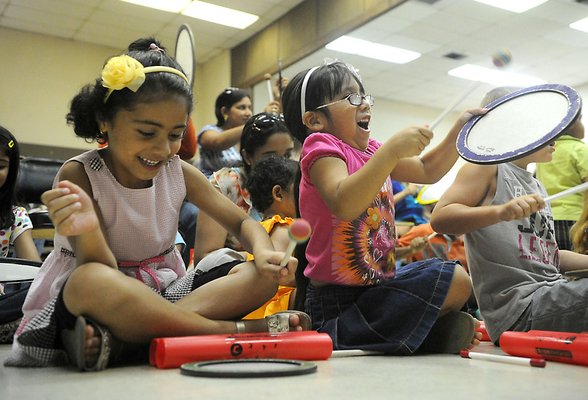
Family Place Library Children playing music in Family Place Library

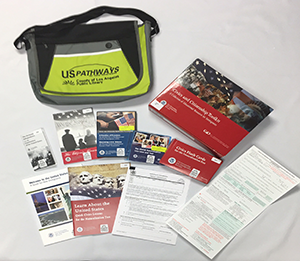
citizenship in a bag

Citizenship-in-a-Bag contains:

  • Settlement information for new immigrants to the United States
  • Information on the U.S. naturalization process;
  • Study materials for the naturalization test
  • Reference materials on the rights and responsibilities of U.S. citizenship
  • Multimedia tools including DVDs and an audio CD
  • Teaching guides and planning resources
  • flash cards and books

Checkout or place a hold on a Citizenship-in-a-Bag toolkit.

Great! Thank you for sharing your photos with Catalina PhotoShare, a community history project of LA County Library.

Your photos will be reviewed and if they meet the criteria, they will be added to the Catalina PhotoShare online collection.

If you have any questions, please contact: digitalprojects@library.lacounty.gov

Terms of Service and Laptop Library Locations

Laptops in this kiosk can be checked out by customers with a LA County Library card in good standing.  The laptop is due back in the kiosk before the library closes on the same day it is checked out.

If you do not return the laptop to the kiosk on the same day you check it out, your library account will be charged the full replacement cost of the laptop.

When you check out a laptop from this kiosk, you agree to use it within the library only.  If you remove the laptop from the library, you may held criminally responsible for theft of the laptop and/or be charged the full replacement cost of the laptop.

You are responsible for the laptop and you agree that you will reimburse the LA County Library for any damages if the laptop is damaged, lost or stolen while checked out to you.

If you check out a laptop and it is damaged, you will give it to library staff immediately.

You must save to a removable storage device (such as a USB drive) since your work will not be saved to the laptop beyond your current checkout.

LA County Library will not be held responsible for any damage or loss of data or media due to any cause while you are using a laptop from this kiosk.

By using this laptop, you must adhere to the Library’s Acceptable Use Policy. Laptops are available at the following libraries:

A C Bilbrew Library

Artesia Library

Culver City Julian Dixon Library

Clifton M Brakensiek Library

East Los Angeles Library

El Camino Real Library

La Mirada Library

La Puente Library

Leland R Weaver Library

Manhattan Beach Library

Paramount Library

Quartz Hill Library

Sorensen Library

South El Monte Library

South Whittier Library

Temple City Library

View Park Bebe Moore Campbell Library

Walnut Library

West Hollywood Library

Willowbrook Library

Consumer Health Information Program

The Consumer Health Information Program assists the public with medical research by providing information from reliable sources. Customers are invited to use the Norwalk Library collection which consists of books, magazines, videos, and online databases related to health topics. We also provide individualized research services.

Please be aware, we do not provide medical advice, nor are the materials we provide a substitute for a professional medical opinion.

What Can We Do for You?

We can provide you with information on topics such as:

  • Medical conditions or diseases
  • Prescription medications
  • Surgical procedures
  • General physician and hospital information
  • Book and website recommendations for further reading

How to Contact Us

Location: Norwalk Library

Phone: (562) 868-4003

Fax: (562) 868-4065

Email: chips@library.lacounty.gov

Online Resources

Health Databases *

Health & Fitness eBooks and Audiobooks *

LA County Library Californiana Collection

Accessing the Collection

The Californiana Collection is in closed stacks at the Norwalk Library located at 12350 Imperial Hwy, Norwalk, CA 90650.

About the Collection

The Californiana Collection consists of over 24,000 books and over 200 magazine and newspaper titles in paper and on microfilm as well as a collection of state documents including state and county budgets. The goal of this collection is to present a complete picture of the history, culture, environment and artistic expression of the people of California and to some extent, the western United States.

Collection Highlights

  • California Census Schedules from 1850 to 1910
  • Copies of The Alta California newspaper 1849-1891, as well as dozens of other 19th century newspapers from Gold Rush boomtowns, the Owens Valley and San Francisco
  • The Los Angeles Star newspaper 1851-1879
  • City directories dating from the 19th century
  • Official city and county histories from the 19th and 20th centuries
  • Materials on the Donner Party, California water projects, famous California crimes, Hollywood culture, biographies of Californians, pioneer narratives of the early days of California, and histories of the state written over the course of 150 years