MY ACCOUNT
DONATE
SEARCH
LA County Library Logo
MY ACCOUNT
DONATE
SEARCH
  • GET A LIBRARY CARD
  • LOCATIONS
  • BOOKS & MATERIALS

    • Search Catalog
    • Booklists
    • Special Collections
    • Recommend A Title
    • Customized Recommendations
    • Books by Mail

    DIGITAL LIBRARY

    • eBooks & Audiobooks
    • Movies & TV
    • Music
    • Newspapers & Magazines

    MORE TO BORROW

    • CA State Parks Passes
    • Hotspot Loans
    • Tools & Musical Instruments
    • Museum Passes
    • Board Games
    • Seeds

    HELP

    • Getting Started Using the Online Catalog
    • Borrowing Materials
    • Download the Library Mobile App
    • Frequently Asked Questions
    • Events Calendar
    • Virtual Programs
    • Virtual Author Talks
    • YouTube Channel
  • RESEARCH

    • Databases
    • Special Collections
    • Digital Collections
    • Biblioboard Community Collections
    • Local History
    • Transcribe Letters
    • Federal Government Documents

    LEARN

    • Online Learning
    • Earn Your High School Diploma
    • Reading & Writing for Spanish Speakers
    • Learn Basic Tech
  • EXPLORE BY INTEREST

    • Cultural Resource Centers
    • Business & Career
    • Citizenship & Immigration
    • Faith, Culture, and Community
    • LBGTQ+ Pride
    • Parenting
    • Tax Informatiom
    • Veterans
    • Writers

    EXPLORE BY AGE

    • Early Learners
    • Kids
    • Teens
    • Students
    • Emerging Adults
    • Adults
    • Older Adults
  • CONNECT TO TECH

    • Wi-Fi
    • Hotspot Loans
    • Public Computers
    • Wireless Printing & Copies

    MOBILE FLEET

    • Bookmobiles
    • MākMō

    COMMUNITY

    • Reserve Meeting & Study Rooms
    • Emergency & Disaster Preparedness
    • Health & Wellness
    • Legal Resources
    • Books for Jails
    • Little Libraries
    • Metro Tap Cards
    • My Brother's Keeper Peer Advocates
    • EV Charging Locations
    • LA County Departments

Gardena

Community History

Gardena, once the berry-growing capital of southern California, is today called the “Freeway City” because it is bordered by the Artesia, Harbor, and San Diego freeways to its south, east, and west, respectively. Its modern-day urban designation is a far cry from Gardena’s early reputation as a “garden spot,” a lush oasis of greenery fed by the waters of the Dominguez Slough. Long before it was officially incorporated in 1930 by combining the rural communities of Moneta and Strawberry Park, Gardena was known first by Gabrielino Indians and later Spanish and American settlers as a long green stretch of land amidst coastal sage scrub.

The community originally evolved from part of the roughly 43,000-acre Spanish land grant, the Rancho San Pedro, given to Juan Jose Dominguez around 1800. The site was later named the Rosecrans Rancho after Union Army Major General William Starke Rosecrans, who bought 16,000 acres following the Civil War. This land would later be bordered on the north by Florence Avenue, on the south by Redondo Beach Boulevard, on the east by Central Avenue, and on the west by Arlington Avenue. After the property changed hands several times, early Gardena was laid out with Figueroa and 161st streets at its center, the idea being that the Los Angeles and Redondo Railway would pass next to it when extended south between those two communities. When the route instead came in along Vermont Avenue, the community moved to accommodate the change.

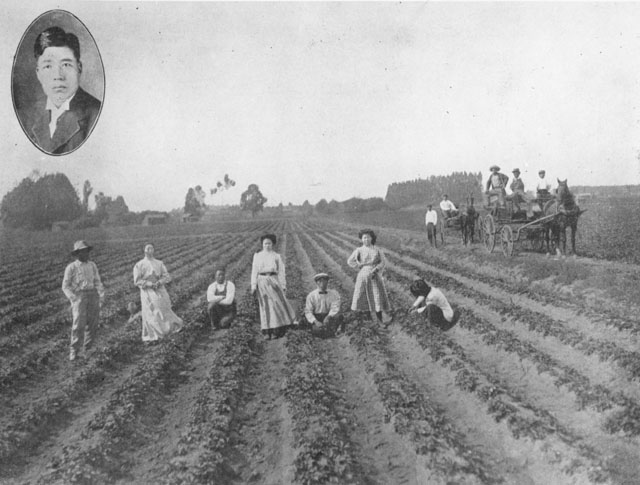
Farming became Gardena’s main industry early in the twentieth century, though berries, ­especially strawberries, ­were its claim to fame. The community became known as “Berryland,” and was renowned for its Strawberry Day Festival and parade every May. The berry industry dwindled with World War I, when land was used first for other crops and then later for development.

los angeles and redondo
learn more about the city of gardena

Image Gallery
  • Gallery 1
  • Gallery 2
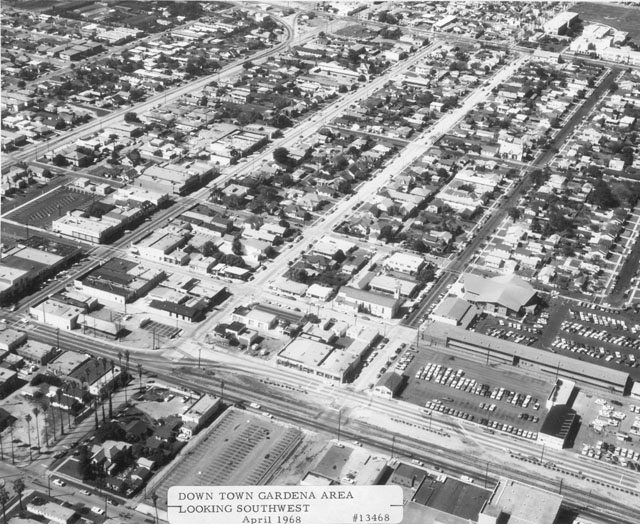
Aerial view of downtown Gardena, looking southwest
Aerial view of downtown Gardena, looking southwest, 1968 [Courtesy of the Gardena City Clerk’s Office]
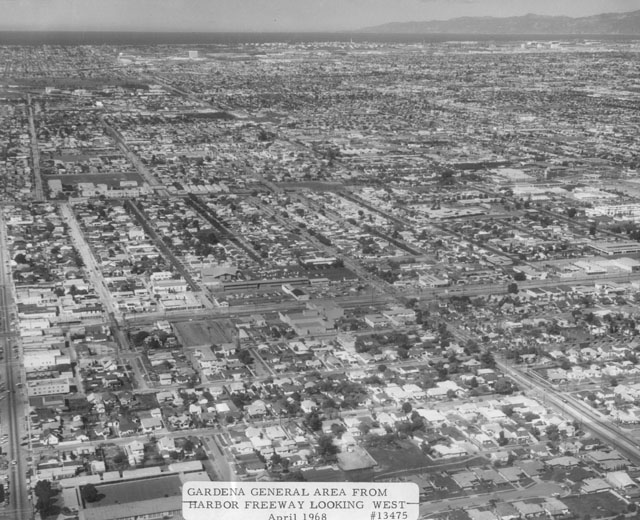
Gardena from Harbor Freeway, looking west
Gardena from Harbor Freeway, looking west, 1968 [Courtesy of the Gardena City Clerk’s Office]
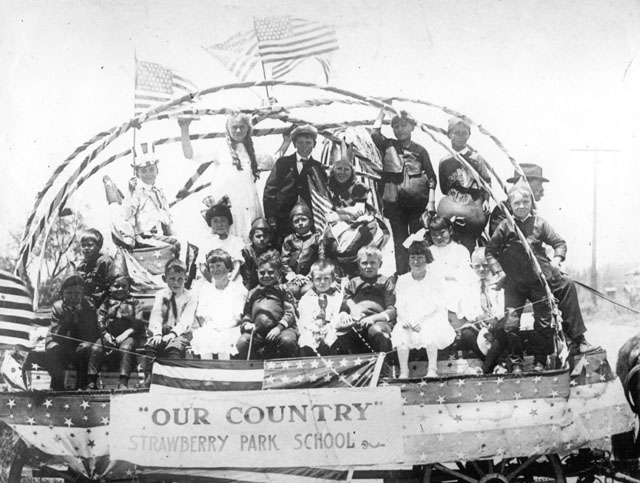
Strawberry Festival parade float featuring students from the Strawberry Park School
Strawberry Festival parade float featuring students from the Strawberry Park School, early 1900s [Courtesy of the Gardena City Clerk’s Office]
Strawberry Festival parade on Gardena Boulevard
Strawberry Festival parade on Gardena Boulevard, 1920 [Courtesy of the Gardena City Clerk’s Office]
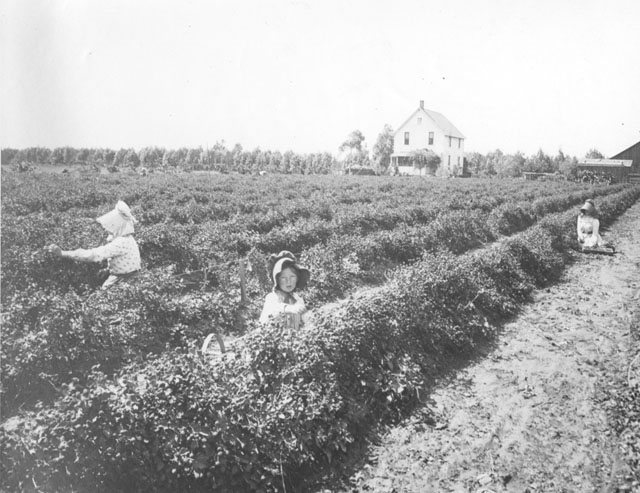
Women and children picking berries on 161st Street in Gardena
Women and children picking berries on 161st Street in Gardena, 1900 [Courtesy of the Gardena City Clerk’s Office]
Japanese farm workers and children with the crop in Lomita
Japanese farm workers and children with the crop in Lomita, 1924 [Courtesy of the Gardena City Clerk’s Office]
Japanese family in a Gardena strawberry field
Japanese family in a Gardena strawberry field, 1912 [Courtesy of the Gardena City Clerk’s Office]
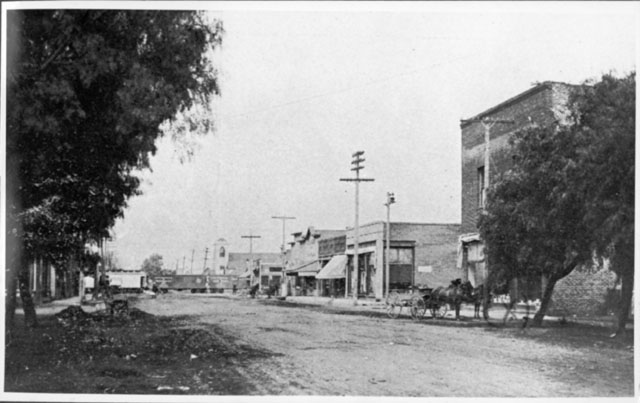
Gardena street scene
Gardena street scene, 1900 [Courtesy of the Gardena City Clerk’s Office]
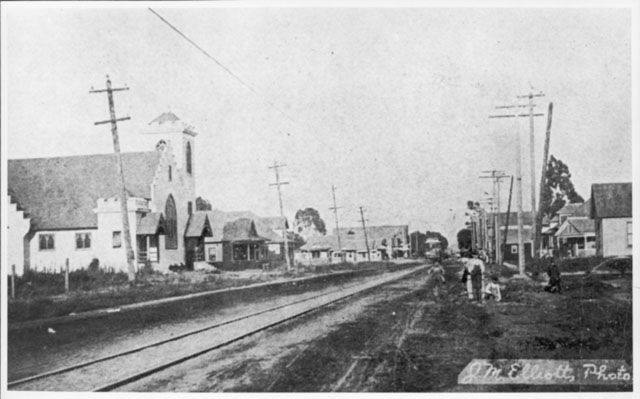
Gardena Boulevard, looking west toward Vermont
Gardena Boulevard, looking west toward Vermont, c. 1890s [Courtesy of the Gardena City Clerk’s Office]
Gardena Boulevard, looking east,
Gardena Boulevard, looking east, 1900 [Courtesy of the Gardena City Clerk’s Office]
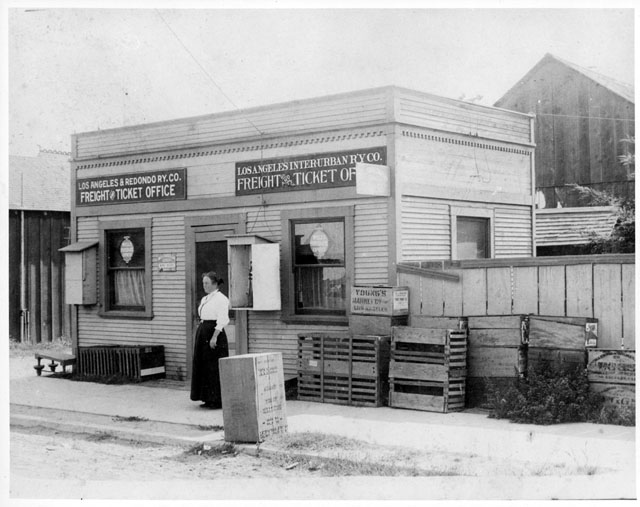
Los Angeles and Redondo Railway Company Freight and Ticket Office in Gardena
Los Angeles and Redondo Railway Company Freight and Ticket Office in Gardena, c. 1890s [Courtesy of the Gardena City Clerk’s Office]
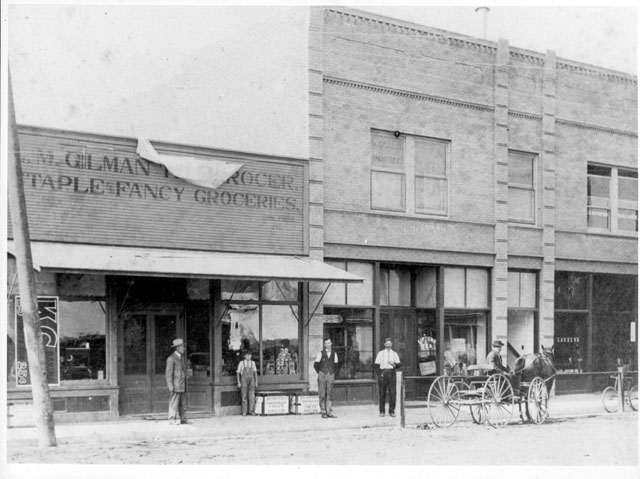
The M. Gilman grocery store in Gardena
The M. Gilman grocery store in Gardena, c. 1900s [Courtesy of the Gardena City Clerk’s Office]
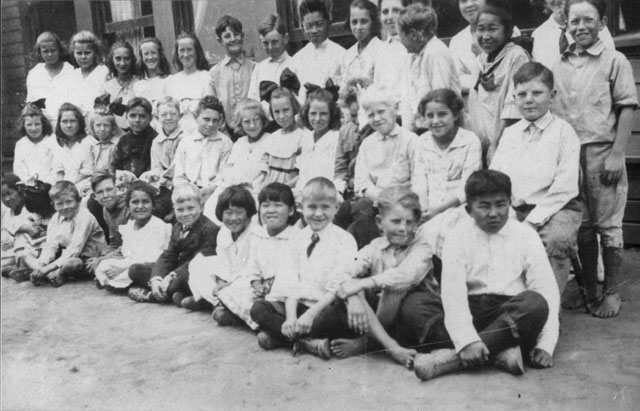
Gardena school class
Gardena school class, c. 1900-1910 [Courtesy of the Gardena City Clerk’s Office]
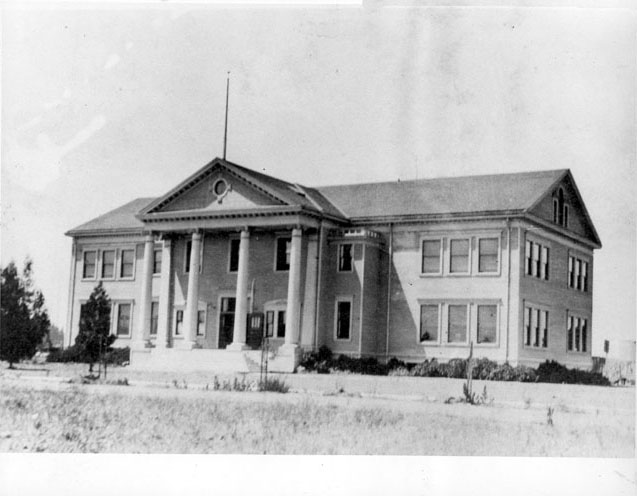
Gardena High School,
Gardena High School, 1909 [Courtesy of the Gardena City Clerk’s Office]
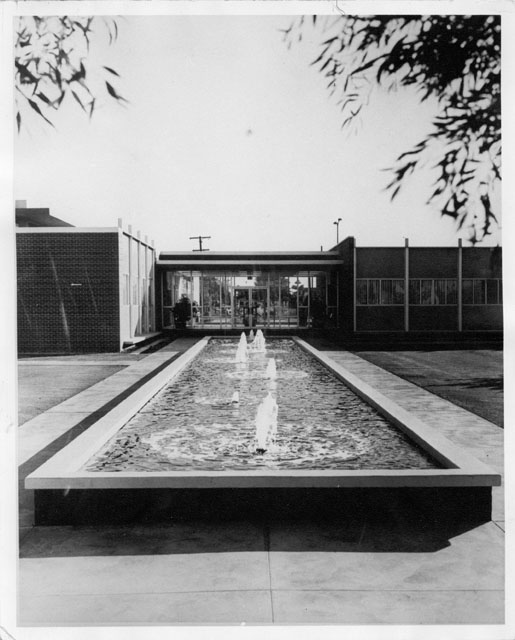
Gardena City Hall
Gardena City Hall, c. 1964 [Courtesy of the Gardena City Clerk’s Office]
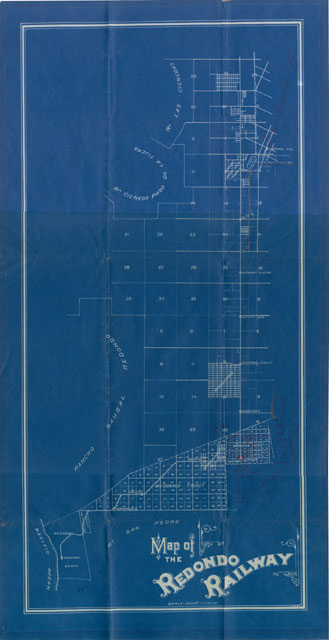
Blueprint map showing the Redondo Railway Company line
Blueprint map showing the Redondo Railway Company line, c. 1890 [Courtesy of the Gardena City Clerk’s Office]
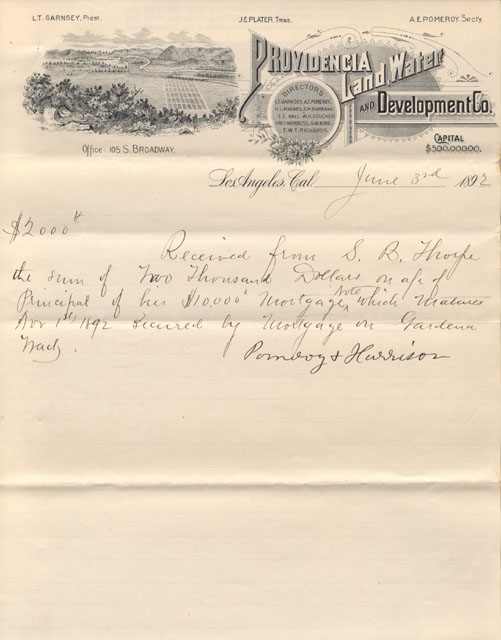
Receipt documenting a mortgage payment on Gardena land by S. B. Thorpe
Receipt documenting a mortgage payment on Gardena land by S. B. Thorpe, 1892 [Courtesy of the Gardena City Clerk’s Office]
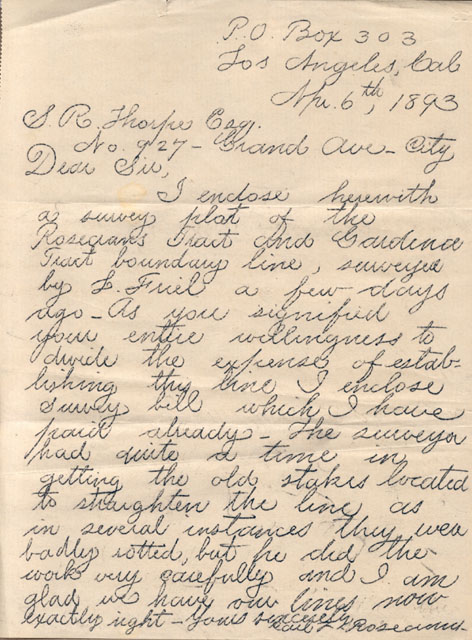
Letter from Colonel Rosecrans to S. R. Thorpe regarding the survey plat map of the Rosecrans tract and Gardena tract boundary line
Letter from Colonel Rosecrans to S. R. Thorpe regarding the survey plat map of the Rosecrans tract and Gardena tract boundary line, 1893 [Courtesy of the Gardena City Clerk’s Office]
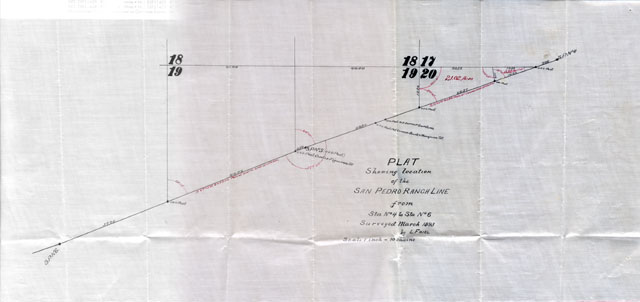
Hand-drawn linen plat map showing the location of the San Pedro Ranch line
Hand-drawn linen plat map showing the location of the San Pedro Ranch line, 1893 [Courtesy of the Gardena City Clerk’s Office]
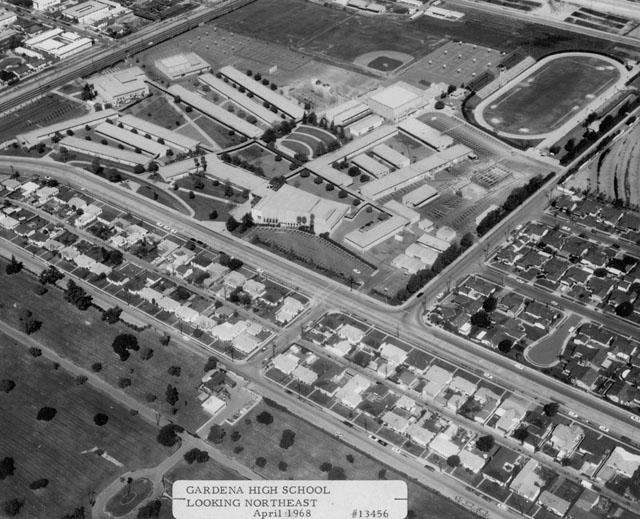
Aerial view of Gardena High School, looking northeast
Aerial view of Gardena High School, looking northeast, 1968 [Courtesy of the Gardena City Clerk’s Office]
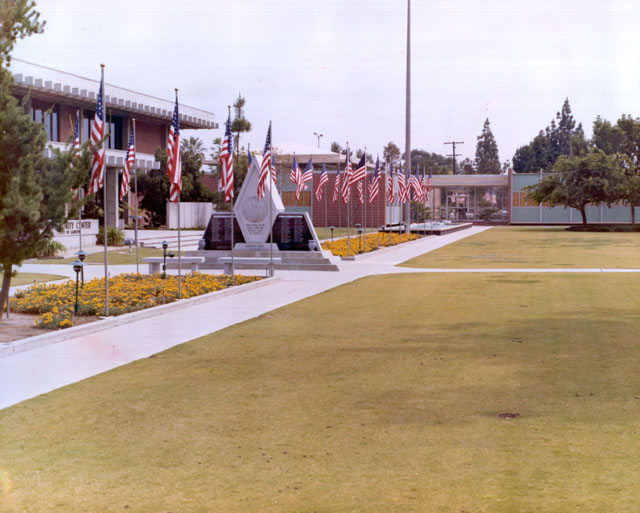
Gardena Civic Center with flags
Gardena Civic Center with flags, 1980 [Courtesy of the Gardena City Clerk’s Office]
Real estate advertisement concerning Gardena property and printed in the 'Gardena Reporter.'
Real estate advertisement concerning Gardena property and printed in the ‘Gardena Reporter.’ [Courtesy of the Gardena City Clerk’s Office]
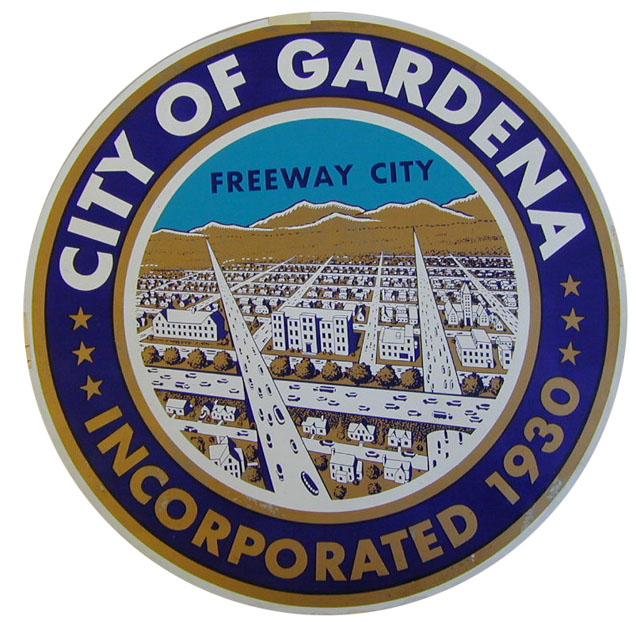
Gardena city seal bearing the city logo 'Freeway City.'
Gardena city seal bearing the city logo ‘Freeway City.’ [Courtesy of the Gardena City Clerk’s Office]
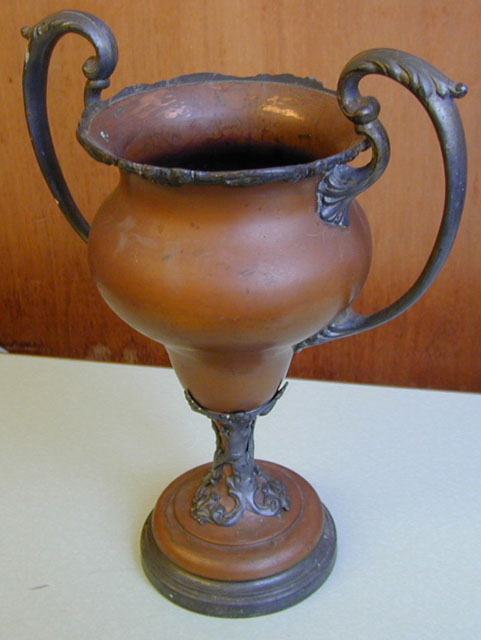
Gardena Strawberry Day trophy
Gardena Strawberry Day trophy, 1917 [Courtesy of the Gardena City Clerk’s Office]
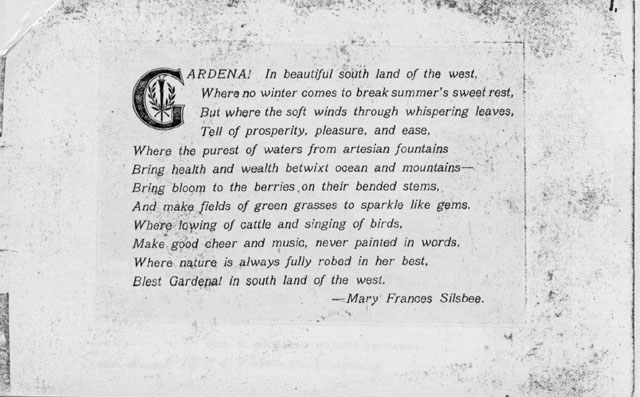
Poem about Gardena printed in a pamphlet advertising the advantages of the area
Poem about Gardena printed in a pamphlet advertising the advantages of the area, c. 1900 [County of Los Angeles Public Library]
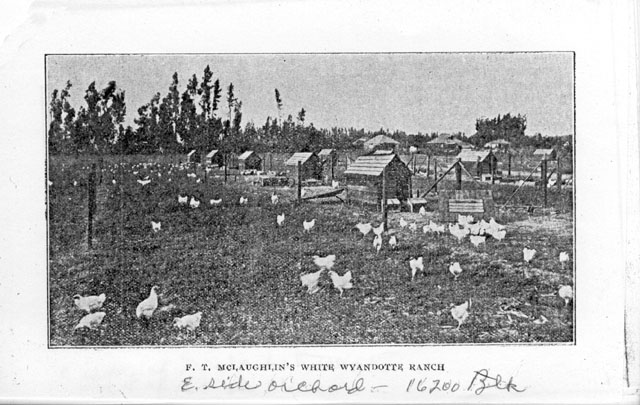
F. T. McLaughlin's white Wyandotte chicken ranch in Gardena
F. T. McLaughlin’s white Wyandotte chicken ranch in Gardena, c. 1900 [County of Los Angeles Public Library]
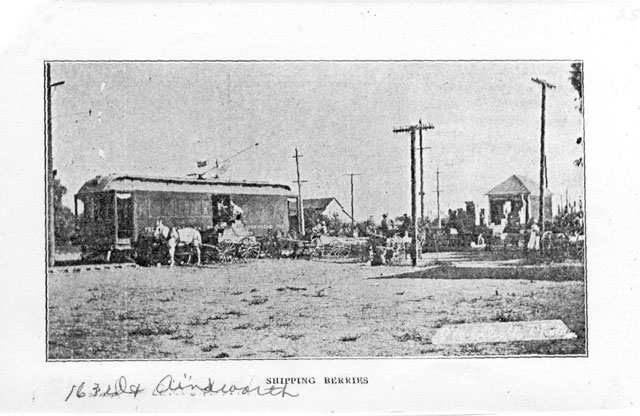
Shipping berries at 163rd Street and Ainsworth
Shipping berries at 163rd Street and Ainsworth, c. 1900 [County of Los Angeles Public Library]
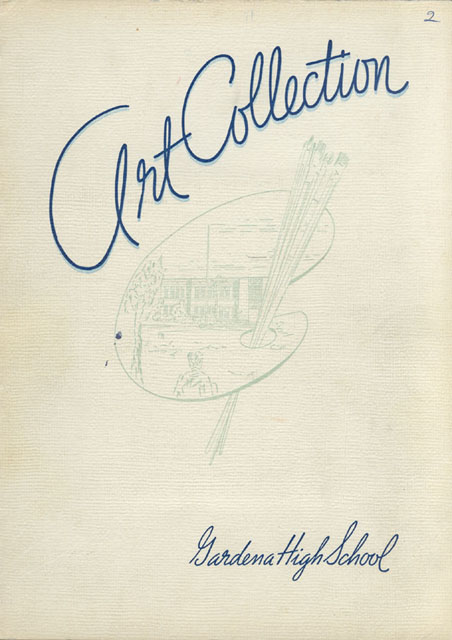
Cover of a commemorative report about Gardena High School art collection
Cover of a commemorative report about Gardena High School art collection, 1936 [County of Los Angeles Public Library]
A corner of the 1936 art exhibit
A corner of the 1936 art exhibit [County of Los Angeles Public Library]

Frequently Asked Questions

1. What can you tell me about the early history and founding of Gardena?

The first Spanish settlers arrived in the area in the late 1700s. Nearly all the territory of what would become Gardena Valley was part of Rancho San Pedro, 43,119 acres that Juan Jose Dominguez received between 1784 and 1800 for his military service. This property-the third Spanish land grant and one of the largest made-was used for raising first sheep and then cattle.

Later the site became part of Rancho San Pedro, with the patent confirming the land grant signed by President James Buchanan in December 1858. After the Civil War, Union Army Major General William Starke Rosecrans in 1869 bought 16,000 acres for $2.50 an acre, a low price possibly because the land was deemed worthless for lack of a spring for water. The ranch, dubbed “Rosecrans Rancho,” was bordered by what later was Florence Avenue on the north, Redondo Beach Boulevard on the south, Central Avenue on the east, and Arlington Avenue on the west.

The Rosecrans property was sold in the early 1870s for $50 an acre and then broken into parcels. One of those became the 800-acre McDonald Ranch, whose ranch buildings stood at today’s intersection of 161st and Figueroa streets. Gardena proper began in 1887 when the Pomeroy & Harrison real estate developers subdivided the ranch, and-anticipating that the coming of the Los Angeles and Redondo Railway would stretch south on Figueroa Street-planned the new community with the ranch buildings at its two-acre center.

As it turned out, the real estate people were proved wrong. The railway, which opened in April 1890, was built through Gardena-but rather than going down Figueroa Street it followed Vermont Avenue. Undaunted, the residents of the fledgling community moved themselves and the town’s core from its original location to the intersection of Vermont and 166th streets in 1889, the year before the railroad opened in April 1890-and that’s where Gardena’s modern-day center still is.

Gardena, named by the daughter of early settler Spencer Thorpe in honor of being a “garden spot,” was incorporated on September 11, 1930 with the blending of rural communities Moneta and Strawberry Park. Its new municipal status represented a response to the so-called “Alondra Park incident” that threatened to burden taxpayers with an enormous debt.

Los Angeles and Redondo Communities

2. Who was William Starke Rosecrans and how was he involved in Gardena's founding?

Rosecrans, a Major General in the Union Army, was born in Ohio in 1819 of Dutch descendants who had moved first to Pennsylvania before heading to Ohio. An 1842 graduate of West Point, Rosecrans after the Civil War came to Southern California to invest in land and in 1869 bought 16,000 acres of what became “Rosecrans Rancho” for $2.50 an acre. Though this 25-square-mile tract of land was flat and fertile, it was considered to be of no value, possibly because it lacked springs. However, it was from Rosecrans’ property that Gardena ultimately emerged.

After relocating to California, the Rosecrans was often away on business. In 1868 he was appointed U.S. Minister to Mexico; in 1869 he became one of the incorporators of the Southern Pacific Railroad; he was elected to the United States Congress in 1881 and again in 1884; and in 1885 he was appointed Registrar of the U.S. Treasury. He retired in 1893 and died near Redondo in 1898. His son, Carl F. Rosecrans, became owner of Rosecrans Rancho and was the major catalyst for the building of the San Pedro rail line through Gardena between Los Angeles and San Pedro.

William and Sylvester Rosecrans

3. What can you tell me about Gardena's agriculture?

Gardena was dubbed “Berryland” for its acres of strawberries as well as raspberries and blackberries grown year-round a century ago. The community owes its early reputation as a farming community to the Dominguez Slough, whose waters made Gardena an oasis amid an otherwise barren landscape. Among the crops grown there besides berries were tomatoes, alfalfa, and barley.

Learn about Gardena’s agriculture

4. What can you tell me about the railroads and Gardena?

Railroads put Gardena on the map near the end of the nineteenth century, after the Los Angeles area underwent a tremendous real-estate boom in 1886 and 1887. The Gardena Valley’s first railway line, which ran from Agricultural Park in Los Angeles to the townsite of Rosecrans (roughly halfway to Redondo), was the “Rosecrans Rapid Transit Railway,” built in 1887 by real estate men Emil D’Artois and Walter L. Webb. After a year of intermittent rail service, they discontinued rail travel in the summer of 1888; by the following spring, the railroad was bought and operated by the Redondo Railway Company. The company wasted no time building a roughly 20-mile rail line between Los Angeles and Redondo, which opened for business April 11, 1890, thus prompting the moving of downtown Gardena from Figueroa Street to Vermont Avenue.

The early twentieth century was a time of great passenger railroad growth in and around Gardena. In 1903, a line connecting Los Angeles and San Pedro via Gardena started operating; it was built by the California Pacific Railway Company, which the following year was bought by the Los Angeles Inter-Urban Railway Company. In 1907, the Los Angeles and Redondo Railway (formerly the Redondo Railway Company) built and started a Moneta Avenue line between East Athens and Strawberry Park.

And in 1912, the Pacific Electric Railway Company completed a line through Gardena between Watts and the Redondo Beach Line. By then, Pacific Electric had also acquired the other lines through consolidation. In 1940, Pacific Electric’s rail passenger service through Gardena ended and was replaced by buses. Today, the only trains passing through Gardena are diesel freight cars.

Los Angeles and Redondo Railway Company

5. What can you tell me about the history of Japanese Americans in Gardena?

Japanese immigrants were a key part of Gardena’s farm community during Gardena’s early years, and their influence remains visible today. In 1911, the Japanese Association founded the Moneta Japanese Institute at the intersection of New York and Market streets, and with donations from the Japanese-American community paid for the lots, a school house, and teachers’ living quarters. Five years later the Parents’ Association founded the Gardena Japanese School. Gardena’s Japanese population was, along with 110,000 other people of Japanese ancestry, moved from Pacific coastal communities to relocation camps in the middle of the United States in the spring and summer of 1942 as a military security measure during World War II.

Relocation of Japanese-Americans

Manzanar National Historic Site

6. What can you tell me about Dominguez Slough and Gardena?

The Dominguez Slough was a serpentine inland freshwater lake created from rainwater runoff, and which made Gardena a well-known “garden spot” in Southern California. The slough wound its way to San Pedro’s mud flats and for many years in Gardena’s early history provided an excellent recreational destination for hunters, fishermen, young boys wanting to play in the great outdoors, and people on vacation who swam and boated there. During the 1920s the slough was drained and filled in order to extend Vermont Avenue in Gardena.

More on Gardena

7. What can you tell me about the Strawberry Festival and the history of strawberries in Gardena?

Gardena was once known as “Berryland” for its production of strawberries as well as raspberries and blackberries, and had a reputation as the berry capital of Southern California. It was especially well-known for its annual Strawberry Day Festival and parade held each May, when each visitor received a free box of strawberries. The community of Strawberry Park also evolved north of Gardena. The berry industry fell off during World War I as other crops were cultivated for the war effort, and afterward the community’s development grew to eclipse much of the former farmland on which the berries were grown. Much of the land on which the berries were grown was leased by Japanese immigrants who cultivated the strawberries with artesian well water.

The Los Angeles & Redondo Railway Company

Los Angeles and Redondo Communities

8. What can you tell me about the history of Native Americans in Gardena?

Based on archaeological digs in and around Gardena, Gabrielino (Tongva) Indians hunted and fished near Gardena, though they did not live there. Numerous skeletons of Native Americans have been dug up on a small mound on the southern edge of the Dominguez Slough, and based on shells found there and the burial site location, the remains are thought to be those of the prehistoric Tongva culture, considered the wealthiest, most dominant, and most progressive of all the Shoshoneans. They were not strictly local Indians, but rather lived as well in Los Angeles County south of Sierra Madre, the Santa Catalina and San Clemente islands, and half of Orange County.

Gabrielino Tongva Springs Foundation

Gabrieleno/Tongva Band of Mission Indians of San Gabriel

Gabrieleno/Tongva Band of Mission Indians of San Gabriel – Links

9. Where can I find historic photographs of the Gardena area?

The Gardena City Clerk’s Office has a photograph album donated by Sumitomo Bank containing historic photographs of Gardena. Several historic Gardena photographs are also available at the Seaver Center for Western History Research at the Natural History Museum of Los Angeles County and at the Los Angeles Public Library.

Places to Visit:

Gardena City Hall
City Clerk’s Office
1700 W. 162nd Street
Gardena, California 90247
310.217.9500

Los Angeles Public Library – Photo Collection

Natural History Museum of Los Angeles County – Seaver Center

10. Do you have any information about the Gardena High School art collection?

The Gardena High School art collection began as the gift of a single painting to the high school by the senior class of 1919. The practice of purchasing a painting for Gardena High School as a senior class gift continued in subsequent years, until the school became the owner of a major collection of plein air paintings by many of California’s greatest Impressionist painters. Eventually, however, the collection languished under substandard storage conditions and was in danger of being lost. A grant from the W. M. Keck Foundation prevented this from happening. CSU Dominguez Hills directed the restoration of the collection and organized an exhibit that opened at the University Art Gallery in January 1999.


UCI Institute and Museum of California Art

Traditional Fine Arts Organization

LA County seal

County of Los Angeles

Do You Need Help?
211 LA County
Public Alerts
Cooling Centers

SITE INFO

Accessibility
Language Access Support
Disclaimer
Privacy Policy
All Library Policies

ABOUT US

About the Library
Library Holidays
Strategic Plan
Career Opportunities
Public Records
Library Commission
Solicitations
Statistics
Land Acknowledgment
Civic Resources

CONTACT US

Email - Ask a Librarian
Text/Chat (M-F 12 pm - 6 pm)
Recommend a Title for Our Collection
Film at a Library
Performer and Presenter Application
Press Room
Support Us
Volunteer
Join a Friends Group
Donate
CONTACT US
LACOUNTY.GOV
  • My Account
  • GET A LIBRARY CARD
    • GET A NEW CARD
      • Digital Library Card
      • Library Cards & Your Account
      • Library Card Application (English / Spanish)
      • Library Card Application (English / Chinese)
      • Get a PIN
      • Get notices by email
      • Frequently Asked Questions
    • Library Policies
      • Library Cards & Your Account
      • Borrowing Materials
      • Computer & Wi-Fi Access
      • Collection Policy
      • Customer Expectations
      • Guidelines for Use of Meeting Rooms
      • Guidelines for Use of Study Rooms
      • Social Software Policy
      • Language Access Support
      • Privacy Policy
  • Digital Library
    • Explore
      • eBooks & Audiobooks
      • Movies & TV
      • Music
      • Newspapers & Magazines
      • Freegalmusic
      • Hoopladigital media
      • Kanopydigital media
      • Libby, by OverDriveebooks and magazines
      • PressReaderdigital magazines
    • Learn
      • Online Learning
      • Brainfuselive tutors
      • Earn your High School Diploma
      • Gale Coursesinstructor-led
      • Learn Basic Tech
      • Learning Expresstest prep
      • LinkedIn Learning (formerly Lynda.com)video classes
      • Mangolanguages
      • Leamosliteracy
      • Universal Classinstructor-led
    • Research
      • BiblioBoard Community Collections
      • Databases
      • Digital Collections
      • Magazines
  • LOCATIONS
  • BOOKS & WRITING
    • SEARCH THE CATALOG
    • Getting Started
    • Booklists
    • Recommend a Title for our Collections
    • More Books to Explore: Suggestions Just for You
    • Books by Mail
    • NoveList Plus
    • Writers’ Corner
    • Tell Your True Tale
  • Teens & Kids
    • Teens
      • Teens
      • Virtual Programming
      • Activity Ideas for Teens
      • Book Reviews by Teens
      • Students
      • Volunteer
    • Kids
      • Kids
      • Virtual Programming
      • Activity Ideas for Kids
      • Students
      • Online Resources
    • Parents & Families
      • Students
      • Early Learners
      • Healing Library Kits
      • Parent Support & Resources
      • Activity Ideas for Early Learners
      • Kids’ Fine Reduction: Great Read Away
      • Virtual Programming
  • Resources
    • Programs
      • Books for Jails
      • Business Resources
      • Citizenship
      • Earn Your High School Diploma
      • LGBTQ+ Pride
      • My Brother’s Keeper Peer Advocates
      • Tools for Job Seekers
      • Work Ready: Borrow a Laptop & Learn Job Skills
      • Older Adults
    • Services
      • Connect to Tech
      • COVID-19 Antigen Tests
      • Discover & Go
      • Federal Government Documents
      • Hotspot Loans
      • MākMō
      • Metro TAP Cards
      • Park & Connect
      • Printing
      • Request a Room
      • Special Collections
      • State Parks Passes
      • Tax Info
      • Tool Lending Library
      • Vaccine Clinics
      • Veterans Connect
      • Wi-Fi
    • Cultural
      • American Indian Resource Center
      • Asian Pacific Resource Center
      • Black Resource Center
      • Chicano Resource Center
      • Faith, Culture, & Community
    • Local History
      • Agoura Hills
      • Antelope Valley
      • Carson
      • Catalina Island
      • Claremont
      • East Los Angeles
      • Gardena
      • Lakewood
      • La Puente Valley
      • Malibu
      • Pico Rivera
      • San Dimas
      • San Fernando
      • San Gabriel
      • South Gate
      • Willowbrook
  • EVENTS
    • Virtual Programming
  • Donate
×
  • Search the Catalog
  • Search the Website
Advanced
Search
Search

Downloads and Streaming

Digital Media

With your LA County Library card, you can download or stream eBooks, eAudiobooks, magazines, music, and movies on your computer, tablet, or phone. It's free and you'll never have to worry about overdue fines!

You'll need a library card in good standing and a PIN to access most downloadable & streaming content.

  • ebooks
  • audiobook icon
  • music icon
  • magazine icon
  • movie icon

Kindle Paperwhite eReader

eReaderBanner

Welcome to a New Way to Read...

Have you walked into a library and wished you could check out more books than you could possibly carry? Check out a Kindle Paperwhite at participating libraries with a collection of titles that you are sure to enjoy. Each Kindle has been loaded with expert-selected books.

You don’t need internet access - all the books are pre-loaded onto the Kindle so you are ready to read.

  • Three week checkout
  • Renew up to 3 times, as long as no one else is waiting
  • Must be 18 or older (or under 18 with parent permission)
  • eBooks cannot be added to this device by user

How do I get one?

  • Visit a participating library to check out or place a hold on a Kindle Paperwhite. Kindles are not sent to other libraries for pick up.
  • Note: Selection of genres varies per library. Click on a library below to see the list of genres.

Library Locations with eReaders

Click on the library to view list of genres available.

Many of our libraries offer enhanced resources, computers, and online services to support your homework needs. Check with your local library!

Family Place

What is Family Place?

A Family Place Library is a center for early childhood information, parent education, emergent literacy, socialization, and family support. Family Place builds on the knowledge that good health, early learning, parent involvement, and supportive communities play a critical role in young children's growth and development. Each Family Place Library features the following core elements:

  • A bright, colorful, and welcoming space for young children and their parents.
  • A collection of books, toys, videos, music, and other materials for babies, toddlers, parents, and service providers
  • Access to resources that emphasize emergent literacy, reading readiness, and parent education.
  • Developmentally appropriate programming, such as baby and toddler storytimes for younger children and their parents.
  • Outreach to new and underserved populations.
  • The Parent-Child Workshop is a five-week workshop featuring local professionals, such as nutritionists, speech and language therapists, and child development experts, who serve as resources for parents.

The first three years of a child's life lay the foundation for learning. Get the tools and resources you need to give your child the best possible start.

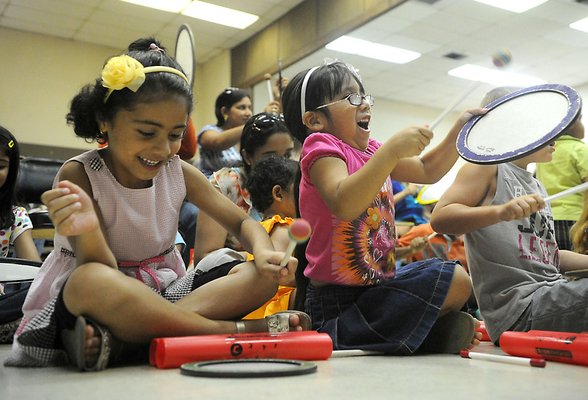
Family Place Library Children playing music in Family Place Library

citizenship in a bag

Citizenship-in-a-Bag contains:

  • Settlement information for new immigrants to the United States
  • Information on the U.S. naturalization process;
  • Study materials for the naturalization test
  • Reference materials on the rights and responsibilities of U.S. citizenship
  • Multimedia tools including DVDs and an audio CD
  • Teaching guides and planning resources
  • flash cards and books

Checkout or place a hold on a Citizenship-in-a-Bag toolkit.

Great! Thank you for sharing your photos with Catalina PhotoShare, a community history project of LA County Library.

Your photos will be reviewed and if they meet the criteria, they will be added to the Catalina PhotoShare online collection.

If you have any questions, please contact: digitalprojects@library.lacounty.gov

Terms of Service and Laptop Library Locations

Laptops in this kiosk can be checked out by customers with a LA County Library card in good standing.  The laptop is due back in the kiosk before the library closes on the same day it is checked out.

If you do not return the laptop to the kiosk on the same day you check it out, your library account will be charged the full replacement cost of the laptop.

When you check out a laptop from this kiosk, you agree to use it within the library only.  If you remove the laptop from the library, you may held criminally responsible for theft of the laptop and/or be charged the full replacement cost of the laptop.

You are responsible for the laptop and you agree that you will reimburse the LA County Library for any damages if the laptop is damaged, lost or stolen while checked out to you.

If you check out a laptop and it is damaged, you will give it to library staff immediately.

You must save to a removable storage device (such as a USB drive) since your work will not be saved to the laptop beyond your current checkout.

LA County Library will not be held responsible for any damage or loss of data or media due to any cause while you are using a laptop from this kiosk.

By using this laptop, you must adhere to the Library’s Acceptable Use Policy. Laptops are available at the following libraries:

A C Bilbrew Library

Artesia Library

Culver City Julian Dixon Library

Clifton M Brakensiek Library

East Los Angeles Library

El Camino Real Library

La Mirada Library

La Puente Library

Leland R Weaver Library

Manhattan Beach Library

Paramount Library

Quartz Hill Library

Sorensen Library

South El Monte Library

South Whittier Library

Temple City Library

View Park Bebe Moore Campbell Library

Walnut Library

West Hollywood Library

Willowbrook Library

Consumer Health Information Program

The Consumer Health Information Program assists the public with medical research by providing information from reliable sources. Customers are invited to use the Norwalk Library collection which consists of books, magazines, videos, and online databases related to health topics. We also provide individualized research services.

Please be aware, we do not provide medical advice, nor are the materials we provide a substitute for a professional medical opinion.

What Can We Do for You?

We can provide you with information on topics such as:

  • Medical conditions or diseases
  • Prescription medications
  • Surgical procedures
  • General physician and hospital information
  • Book and website recommendations for further reading

How to Contact Us

Location: Norwalk Library

Phone: (562) 868-4003

Fax: (562) 868-4065

Email: chips@library.lacounty.gov

Online Resources

Health Databases *

Health & Fitness eBooks and Audiobooks *

LA County Library Californiana Collection

Accessing the Collection

The Californiana Collection is in closed stacks at the Norwalk Library located at 12350 Imperial Hwy, Norwalk, CA 90650.

About the Collection

The Californiana Collection consists of over 24,000 books and over 200 magazine and newspaper titles in paper and on microfilm as well as a collection of state documents including state and county budgets. The goal of this collection is to present a complete picture of the history, culture, environment and artistic expression of the people of California and to some extent, the western United States.

Collection Highlights

  • California Census Schedules from 1850 to 1910
  • Copies of The Alta California newspaper 1849-1891, as well as dozens of other 19th century newspapers from Gold Rush boomtowns, the Owens Valley and San Francisco
  • The Los Angeles Star newspaper 1851-1879
  • City directories dating from the 19th century
  • Official city and county histories from the 19th and 20th centuries
  • Materials on the Donner Party, California water projects, famous California crimes, Hollywood culture, biographies of Californians, pioneer narratives of the early days of California, and histories of the state written over the course of 150 years