Access to the Library catalog, My Account, Libby, Hoopla, and some third-party services will be unavailable on Wednesday, June 3 starting at 9 pm due to server maintenance. Services are expected to resume in the early morning hours of Thursday, June 4.
Celebrate Farmworkers
Honoring the Hands that Feed Us
Each year, Los Angeles County observes Farmworkers Day on the last Monday of March to honor the millions of agricultural laborers whose hard work sustains our communities. This day is a tribute to the resilience, history, and ongoing struggle for the rights of those who work in our fields.
The farmworker movement in California was built on the unity of diverse communities. In 1965, the historic Delano Grape Strike began when Filipino-American workers, led by Larry Itliong and Philip Vera Cruz of the Agricultural Workers Organizing Committee (AWOC), walked out of the vineyards to demand fair wages. They were soon joined by Mexican-American organizers, creating a powerful multi-racial coalition that changed labor history forever.
During this time, a transformative alliance was formed between the National Farm Workers Association and AWOC. This partnership, which became the United Farm Workers (UFW), proved that when workers stand together across racial and ethnic lines, they can overcome even the most powerful interests.
Key Figures of the Movement
While the movement involved thousands of brave individuals, several key leaders were instrumental in its success.
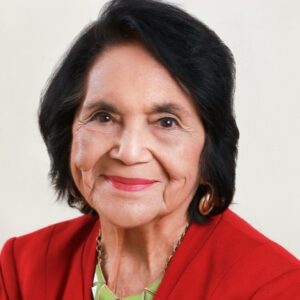
Dolores Huerta
A legendary organizer and co-founder of the UFW. Huerta was a key negotiator for the movement, securing the first-ever collective bargaining agreements for farmworkers.
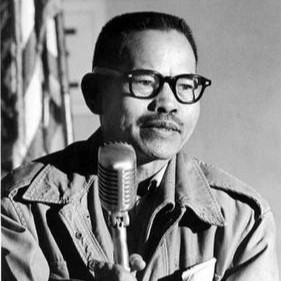
Larry Itliong
A pioneer of Filipino labor organizing who spent decades fighting for the rights of “Manongs” (respected elders) in the fields and canneries.
Philip Vera Cruz
A co-founder of the UFW and a tireless advocate for immigrant rights and inter-ethnic solidarity within the labor movement.
Impact and Legacy
The tireless advocacy of these workers led to the passage of the California Agricultural Labor Relations Act of 1975, the first law in the nation to recognize the right of farmworkers to collective bargaining. Today, Farmworkers Day serves as a reminder of our commitment to fair wages and overtime pay, safe working conditions and heat illness prevention, and much more.
Farmworkers Day is more than a historical commemoration; it is an active call to support the people who work through extreme heat and challenging conditions to feed the nation. We celebrate the progress made while recognizing the work that remains to ensure every worker is treated with the dignity they deserve.
LA County Library offers many citizenship and immigration resources. If you are seeking information on how to become a citizen of the United States, visit our Citizenship and Immigration page to learn more about the resources available to you.
Knowledge is safety so we’re sharing a Step-By-Step Family Preparedness Plan from the Immigrant Legal Resource Center (ILRC). The plan can be downloaded and saved in both English and Spanish. You’ll also find a downloadable “Know Your Rights” pocket card which you can keep on you for immediate reference if ever needed.
All people in the United States, regardless of immigration status, have certain rights and protections under the U.S. Constitution. Visit ILRC to download their “Red Cards.” The cards are available in multiple languages and help people assert their rights and defend themselves in many situations, such as when ICE agents go to a home.
Explore the powerful history of agricultural labor through these documentaries, all available to stream for free on Kanopy with your library card! Discover the origins of the farmworker movement, from the historic solidarity of the Delano Grape Strike to the tireless advocacy of leaders like Dolores Huerta, Larry Itliong, and Philip Vera Cruz. These films honor the diverse coalition of workers who organized for dignity and continue to inspire today’s fight for justice in the fields.
Food Chains
the modern-day struggle of farmworkers in Florida (The Coalition of Immokalee Workers) and their battle against the global supermarket industry.
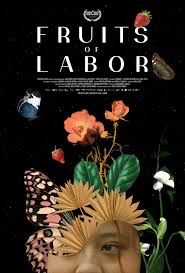
Fruits of Labor The Delano Manongs tells the story of farm labor organizer Larry Itliong and a group of Filipino farm workers who instigated one of the American farm labor movement’s finest hours – The Delano Grape Strike of 1965 that brought about the creation of the United Farm Workers Union (UFW).
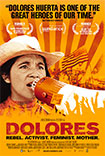
Dolores Delores provides a comprehensive, high-energy look at the UFW co-founder and is available on Kanopy as well as for check out at the Library. Featuring interviews with Gloria Steinem, Luis Valdez, Angela Davis, her children and more, Dolores is an intimate and inspiring portrait of a passionate champion of the oppressed and an indomitable woman willing to accept the personal sacrifices involved in committing one’s life to social change.
The Delano Manongs
The Delano Manongs tells the story of farm labor organizer Larry Itliong and a group of Filipino farm workers who instigated one of the American farm labor movement’s finest hours – The Delano Grape Strike of 1965 that brought about the creation of the United Farm Workers Union (UFW).
Resources
These resources further explore the farmworkers movement and how it is still helping workers today.
Dolores Huerta Foundation
This organization passionately advocates for social justice, focusing on empowering marginalized communities through grassroots organizing, civic engagement, and education initiatives. By championing the rights of underrepresented populations, we strive to create a more equitable and inclusive society for all.
United Farm Workers
Begun in the early 1960s, the United Farm Workers of America is the nation’s first enduring and largest farm workers’ union.
Farmworker Movement Documentation Project
Primary source accounts: photographs, oral histories, videos, essays and historical documents from the United Farm Worker Delano Grape Strikers and the UFW Volunteers who worked to build the farmworker movement.

×
Downloads and Streaming
Digital Media
With your LA County Library card, you can download or stream eBooks, eAudiobooks, magazines, music, and movies on your computer, tablet, or phone. It's free and you'll never have to worry about overdue fines!
You'll need a library card in good standing and a PIN to access most downloadable & streaming content.
Kindle Paperwhite eReader
Welcome to a New Way to Read...
Have you walked into a library and wished you could check out more books than you could possibly carry? Check out a Kindle Paperwhite at participating libraries with a collection of titles that you are sure to enjoy. Each Kindle has been loaded with expert-selected books.
You don’t need internet access - all the books are pre-loaded onto the Kindle so you are ready to read.
Three week checkout
Renew up to 3 times, as long as no one else is waiting
Must be 18 or older (or under 18 with parent permission)
eBooks cannot be added to this device by user
How do I get one?
Visit a participating library to check out or place a hold on a Kindle Paperwhite. Kindles are not sent to other libraries for pick up.
Note: Selection of genres varies per library. Click on a library below to see the list of genres.
Library Locations with eReaders
Click on the library to view list of genres available.
Many of our libraries offer enhanced resources, computers, and online services to support your homework needs. Check with your local library!
Family Place
What is Family Place?
A Family Place Library is a center for early childhood information, parent education, emergent literacy, socialization, and family support. Family Place builds on the knowledge that good health, early learning, parent involvement, and supportive communities play a critical role in young children's growth and development. Each Family Place Library features the following core elements:
A bright, colorful, and welcoming space for young children and their parents.
A collection of books, toys, videos, music, and other materials for babies, toddlers, parents, and service providers
Access to resources that emphasize emergent literacy, reading readiness, and parent education.
Developmentally appropriate programming, such as baby and toddler storytimes for younger children and their parents.
Outreach to new and underserved populations.
The Parent-Child Workshop is a five-week workshop featuring local professionals, such as nutritionists, speech and language therapists, and child development experts, who serve as resources for parents.
The first three years of a child's life lay the foundation for learning. Get the tools and resources you need to give your child the best possible start.
Great! Thank you for sharing your photos with Catalina PhotoShare, a community history project of LA County Library.
Your photos will be reviewed and if they meet the criteria, they will be added to the Catalina PhotoShare online collection.
If you have any questions, please contact: digitalprojects@library.lacounty.gov
Terms of Service and Laptop Library Locations
Laptops in this kiosk can be checked out by customers with a LA County Library card in good standing. The laptop is due back in the kiosk before the library closes on the same day it is checked out.
If you do not return the laptop to the kiosk on the same day you check it out, your library account will be charged the full replacement cost of the laptop.
When you check out a laptop from this kiosk, you agree to use it within the library only. If you remove the laptop from the library, you may held criminally responsible for theft of the laptop and/or be charged the full replacement cost of the laptop.
You are responsible for the laptop and you agree that you will reimburse the LA County Library for any damages if the laptop is damaged, lost or stolen while checked out to you.
If you check out a laptop and it is damaged, you will give it to library staff immediately.
You must save to a removable storage device (such as a USB drive) since your work will not be saved to the laptop beyond your current checkout.
LA County Library will not be held responsible for any damage or loss of data or media due to any cause while you are using a laptop from this kiosk.
By using this laptop, you must adhere to the Library’s Acceptable Use Policy. Laptops are available at the following libraries:
The Consumer Health Information Program assists the public with medical research by providing information from reliable sources. Customers are invited to use the Norwalk Library collection which consists of books, magazines, videos, and online databases related to health topics. We also provide individualized research services.
Please be aware, we do not provide medical advice, nor are the materials we provide a substitute for a professional medical opinion.
What Can We Do for You?
We can provide you with information on topics such as:
Medical conditions or diseases
Prescription medications
Surgical procedures
General physician and hospital information
Book and website recommendations for further reading
The Californiana Collection is in closed stacks at the Norwalk Library located at 12350 Imperial Hwy, Norwalk, CA 90650.
About the Collection
The Californiana Collection consists of over 24,000 books and over 200 magazine and newspaper titles in paper and on microfilm as well as a collection of state documents including state and county budgets. The goal of this collection is to present a complete picture of the history, culture, environment and artistic expression of the people of California and to some extent, the western United States.
Collection Highlights
California Census Schedules from 1850 to 1910
Copies of The Alta California newspaper 1849-1891, as well as dozens of other 19th century newspapers from Gold Rush boomtowns, the Owens Valley and San Francisco
Official city and county histories from the 19th and 20th centuries
Materials on the Donner Party, California water projects, famous California crimes, Hollywood culture, biographies of Californians, pioneer narratives of the early days of California, and histories of the state written over the course of 150 years