LGBTQ+ Pride
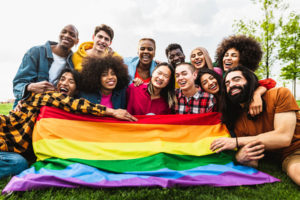 Celebrating the LBGTQ+ Community
Check out the resources and materials we’ve put together to inform and celebrate the LGBTQ+ community in Los Angeles County and beyond. This page is updated regularly, so feel free to check back for more new and exciting videos, booklists, activities, learning pathways, and more. There’s also info on accessing relevant archives on LGBTQ+ history that researchers will find valuable
LGBTQ+ Collection at the West Hollywood Library
Our West Hollywood Library holds our LGBTQ+ Collection, a comprehensive collection of LGBTQ+ fiction and non-fiction literature and history in a variety of formats: books, journals, periodicals, VHS, and DVD. The collection reflects the rich history, culture, and experiences of the LGBTQ+ community both locally and globally. It includes popular and academic materials, out-of-print and hard-to-find titles, LGBTQ+ classics, current bestsellers, and new Lambda Literary Award winners and nominees.
Featured Event
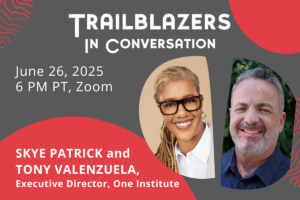
Trailblazers in Conversation with Tony Valenzuela
Join us as LA County Librarian Skye Patrick sits down with Tony Valenzuela, the Executive Director of One Institute, to discuss the history of LGBTQ+ activism in Los Angeles, why our histories matter, and what it means to support the next generation of storytellers and activists.
Watch event recording
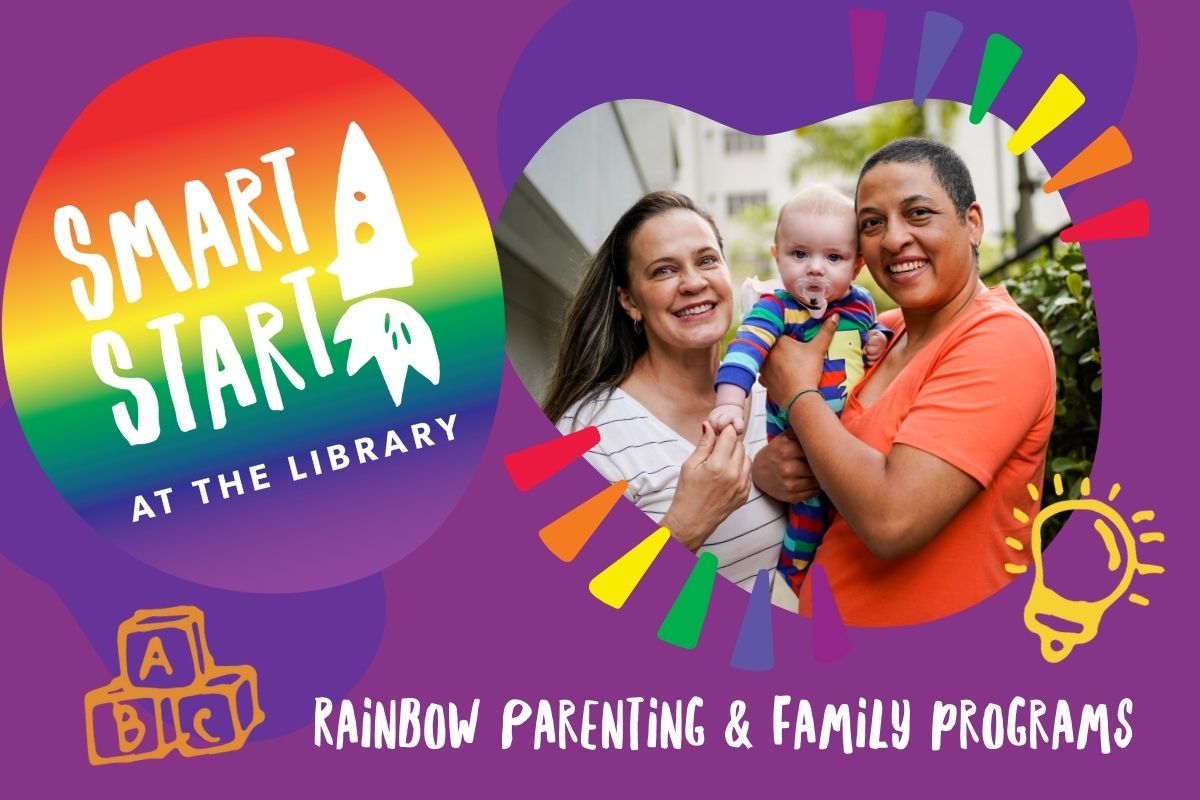 Rainbow Parenting & Family Programs
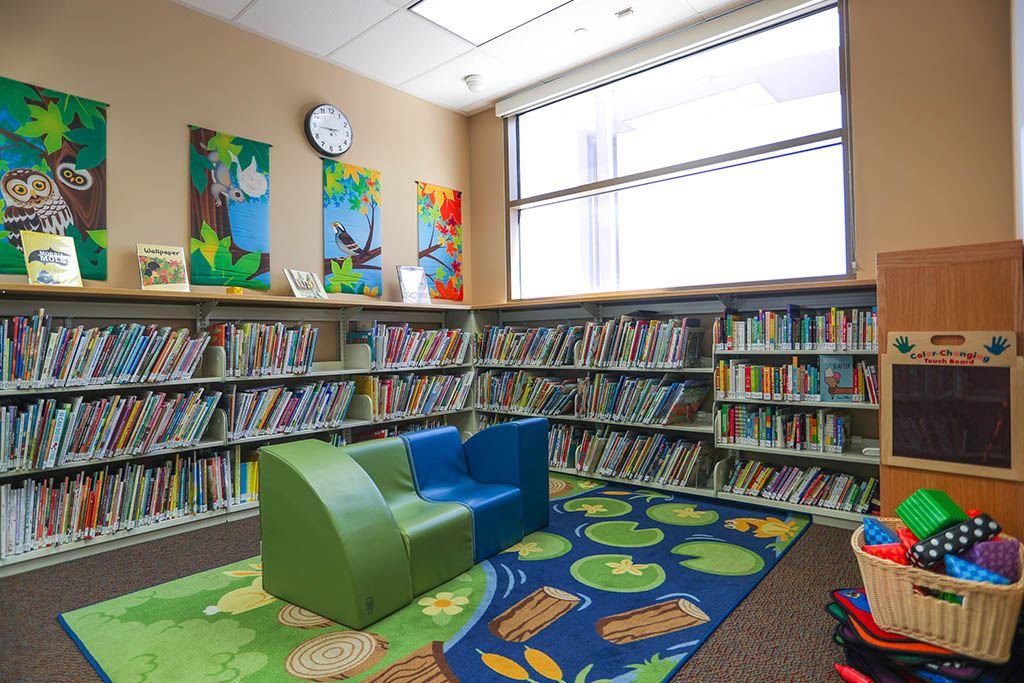
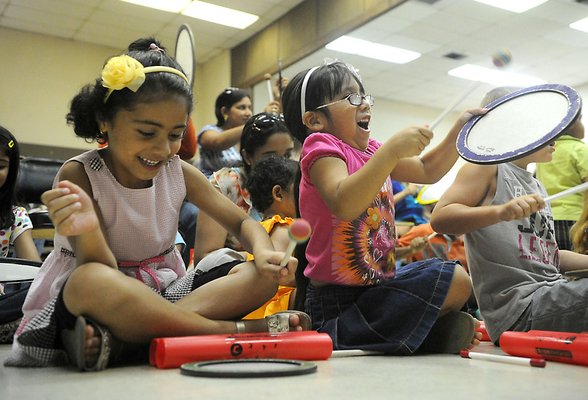
LA County Library’s Rainbow Parenting and Family Programs strive to build community and create a safe space for LGBTQ+ families in the library. Meet other local families, share experiences, inspire and encourage each other! Programs are specially designed for families of younger kids, ages birth – 5 years, and their families.
Learn more about these programs and where they are available.
Featured LGBTQ+ Trailblazers
Learn the stories of advocates that helped advance LGBTQ+ rights in the United States. Click the plus sign (+) for the full bios and links to items available to borrow with your LA County Library card.
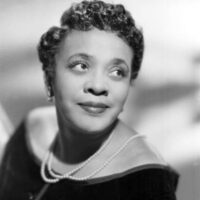
Jackie Moms Mabley
Jackie "Moms" Mabley (1894 – 1975) was a groundbreaking comedian whose fearless humor challenged racism, sexism, ageism, and social injustice.
Rising to fame during the era of vaudeville and the Chitlin' Circuit, she became one of the first Black women to achieve national success in stand-up comedy. Through sharp wit and unforgettable storytelling, Mabley transformed comedy into a powerful tool for social commentary, paving the way for generations of performers.
Born Loretta Mary Aiken on March 19, 1894, in Brevard, North Carolina, Mabley overcame extraordinary adversity before becoming one of America's most beloved entertainers. After leaving home as a teenager, she honed her craft performing in traveling shows and on the Chitlin' Circuit, where Black artists created vibrant cultural spaces despite the barriers of segregation. Adopting the persona of "Moms," she appeared as a wise, quick-witted grandmother whose jokes about politics, race, relationships, and everyday life entertained audiences while exposing society's injustices. Behind the laughter was a bold social critic who used comedy to speak truths that many others could not.
Mabley's influence extended far beyond the stage. She broke barriers by headlining major theaters, recording bestselling comedy albums, and appearing on national television, introducing mainstream audiences to a distinctly Black comedic voice. Her willingness to address civil rights, women's equality, poverty, and aging helped redefine what stand-up comedy could accomplish. She is also increasingly recognized as an important figure in Black LGBTQ+ history.
Although she was not publicly "out" for most of her career, friends and fellow performers acknowledged that Mabley had romantic relationships with women, and many historians view her as one of the earliest Black lesbian entertainers to achieve national prominence. Her enduring legacy has been recognized through honors including induction into the National Comedy Center's Hall of Fame and the National Black Radio Hall of Fame. In 2017, the documentary I Be Done Been Was Is introduced her remarkable life and groundbreaking career to new audiences. Today, Mabley is celebrated not only as a pioneering comedian but also as a fearless trailblazer whose authenticity, resilience, and advocacy helped expand representation in American entertainment.
Video
Whoopi Goldberg Presents Moms Mabley (documentary)
Books
Black Out Loud: The Revolutionary History of Black Comedy from Vaudeville to '90s Sitcoms by Geoff Bennett
Black Heroes of the 20th Century by Jessie Carney Smith
Online Resources
“Jackie Moms Mabley – Nominee” (The Legacy Project)
“Moms Mabley” (National Museum of African American History & Culture)
"Moms" Mabley 1894-1975 (P-100) (North Carolina Department of Natural & Cultural Resources)
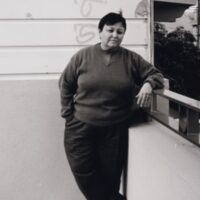
Barbara May Cameron
“It’s important for us as Indian People as we reclaim and revitalize our languages and traditions to include the heritage and contributions of Indian lesbians and gay men...To know and understand that being lesbian or gay is an Indian tradition.” - Barbara Cameron, 1991
Photographer, writer, and human rights activist Barbara May Cameron (1954-2002) (Hunkpapa Lakota) was born in Fort Yates, North Dakota in May 22, 1954. Cameron was raised by her grandparents on the Standing Rock Reservation. After studying photography and film at the American Indian Art Institute in Sante Fe, New Mexico, she attended the San Francisco Art Institute in 1973.
While gatherings, conferences, and movements for LGBTQ+ people existed during the 1970s, the intersectionality of being Native American and LGBTQ+ was a struggle for many; prejudice against lesbians and gays was common at Native American gatherings and racism against Native Americans was prevalent LGBTQ+ groups. In 1975, Cameron co-founded Gay American Indian (GAI), the first formal Two Spirit Society in the United States, to provide support for gay and lesbian Native Americans in the San Francisco area.
GAI raised awareness about the AIDS crisis affecting the community and established the Indian AIDS Project in 1987. Though GAI disbanded in the late 1990s, their group provided a model for other Native American Two-Spirits groups throughout the United States. Cameron died on February 12, 2002 in San Francisco.
Online Resources
“A Forgotten Pioneer: The Two-Spirit Activism of Barbara Cameron” by Gregory D. Smithers via Ms. magazine
“Barbara May Cameron” via the Gale Online Biography Collection (library card number required for access)
Barbara May Cameron's 69th Birthday Google Doodle
Book
Unsung Heroines: 35 Women Who Changed the Bay Area by Rae Alexandra (ebook)
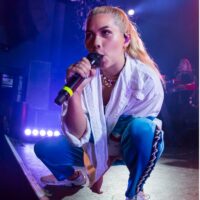
Hayley Kiyoko
Hayley Kiyoko (1991– ) is a Japanese American singer, actress, director, and author whose work has helped bring LGBTQ+ stories and Asian American representation into the mainstream.
Born and raised in Los Angeles, Kiyoko is the daughter of a Japanese-Canadian mother and a white American father. As a mixed-race Japanese American, Kiyoko has spoken openly about the challenges of growing up feeling caught between cultures and rarely seeing people who looked like her represented as openly queer. Her experiences navigating both her racial and sexual identities have become an important part of the authentic and personal storytelling that defines her work.
Kiyoko began her entertainment career as a child actor and musician, appearing in television shows and films including Lemonade Mouth, Wizards of Waverly Place, and the Scooby-Doo franchise. She gained widespread recognition as a solo artist with her 2015 single “Girls Like Girls,” an unapologetically queer love song accompanied by a self-directed music video. The song became a breakthrough moment for Kiyoko and for many LGBTQ+ fans who had rarely seen young women loving women portrayed with such openness, joy, and hope. Her debut studio album Expectations followed in 2018, further establishing her as a leading voice in queer pop music.
Since then, Kiyoko has continued to expand the ways she tells LGBTQ+ stories. Her 2022 album Panorama celebrated queer love and self-acceptance, while her 2023 young adult novel Girls Like Girls became a #1 New York Times bestseller and won a Goldie Award for Young Adult Fiction. In 2025, she released her second novel Where There’s Room for Us, a queer historical romance set in a reimagined Victorian England where people are free to love whom they choose. The novel follows Ivy, an outspoken poet, and Freya, a young woman bound by the expectations of high society as they navigate love, identity, and the pressures of tradition. Inspired in part by Kiyoko’s own experiences and her love of classic books such as Pride and Prejudice, the novel imagines a world where a queer woman of color can not only find love, but thrive. Kiyoko’s storytelling has now expanded across music, literature, and film. In 2026, she made her feature-film directorial debut with the film adaptation of Girls Like Girls, transforming the story that began with her breakthrough song into a full-length coming-of-age romance.
Kiyoko’s significance extends beyond her music and acting career. By openly embracing her identity as a queer Japanese American woman, she has helped challenge the idea that LGBTQ+ and AANHPI identities exist separately. Her work creates space for young people, especially queer people of color, to see themselves reflected in stories of love, identity, and belonging.
Books
Girls Like Girls by Hayley Kiyoko
Where There’s Room for Us: A Novel by Hayley Kiyoko
Online Resources
Hoopla Artist Page (Stream her music, movies, and audiobook)
Hayley Kiyoko’s Official Website
“Hayley Kiyoko Turned Her Teenage Pain Into a Sapphic Success” via The New York Times
“Hayley Kiyoko on Turning “Girls Like Girls” into a Swoony YA Novel” via Interview Magazine
“Hayley Kiyoko Is Still Becoming Lesbian Jesus” via Paper Magazine
“Hayley Kiyoko on ‘Girls Like Girls,’ Lesbian Summer, and the Power of Queer Representation” via Gayety (video)
“Hayley Kiyoko on the 10-Year Fight to Make Girls Like Girls” via Asian American Girl Club (video)

José Sarria
José Sarria (1922–2013) was a pioneering activist, drag queen, and the first openly gay candidate to run for public office in the United States.
Born in San Francisco, California in 1922 to Mexican American and Colombian parents, Sarria enlisted in the United States Army following the attack on Pearl Harbor. After his distinguished service and honorable discharge, he returned to San Francisco where he worked as a waiter and later hostess at the Black Cat Café. There he was billed as “The Nightingale of Montgomery Street.” He used humor and performance art to instill a sense of pride and identity in San Francisco’s Gay Community.
Sarria’s activism and advocacy for LGBTQ+ people led him to be one of the most important leaders of the community. In 1961 Sarria’s run for San Francisco Board of Supervisors gave him the distinction of being the first openly gay candidate for office in the United States. His campaign put the words “Gay Power” into the American political lexicon. Later, Sarria co-founded the Society for Individual Rights which helped make him one of the most well-known gay activists of the time. In 1963, Sarria and local gay bar owners founded the Tavern Guild of San Francisco, organizing to stand against growing police raids and arrests. He also founded The International Court System which is a charitable organization dedicated to promoting human rights and LGBTQ+ inclusivity across North America.
Sarria’s work has been honored in many ways. He was inducted into the National LGBTQ Wall of Honor located in the historic Stonewall Inn in New York City. He is the first gay man to have a street named after him in San Francisco. He also was honored as an historic figure on the Rainbow Honor Walk in the San Francisco Castro District and received a star on Palm Springs’ famous “Walk of Stars.” More recently, the International Imperial Court is leading a campaign to create a U.S. postage stamp in Sarria’s honor.
Books
Adult
San Francisco's Transgender District (ebook)
LGBTQ+ Trailblazers of San Francisco by William Lipsky
Teen
Queer, There, and Everywhere: 23 People Who Changed the World by Sarah Prager
Youth
What Kind of Queen?: A Royal Biography of Drag Queen and Activist José Sarria by Kyle Casey Chu
Rainbow Revolutionaries: Fifty LGBTQ+ People Who Made History by Sarah Prager
Image: https://commons.wikimedia.org/wiki/File:Jose_Sarria_2010_by_John_Stephen_Dwyer.jpg
Featured Booklist
Explore other LGBTQ+ booklists to find your next great read.
Featured Activity Idea
Can you spot all of the gender expansive terms and historical figures in our Word Search? Grab a pen or highlighter and see how you do! When you’re done, take a look at the answer sheet. It has a full glossary of terms and historical references.
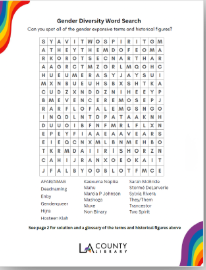
Additional Activities & Resources
You can check out our Learning Pathways for opportunities to dig deeper into topics impacting the LGBTQ+ community, and view our at-home activity ideas for some fun ways to celebrate Pride Month.
Activity Idea: LGBTQ+ Pop Icons Crossword Puzzle
Activity Idea: Pride Parade Fan
Activity Idea: Bessie Smith
Activity Idea: Lifeguard Tower at Ginger Rogers Beach Coloring Page
Activity Idea: NaNoWriMo Prompts
Activity Idea: Thank You Letter to Queer Pioneers
Activity Idea: Queer Vision Board
Activity Idea: Visual Mapping
Learning Pathway: Gender Expansiveness & Queer Electronic Music